


Football/Soccer Session (Difficult): Defending (individual and small group organization)
Profile Summary

| Name: | Phillip Gross |
|---|---|
| City: | Arlington Heights |
| Country: | United States of America |
| Membership: | Adult Member |
| Sport: | Football/Soccer |

Description
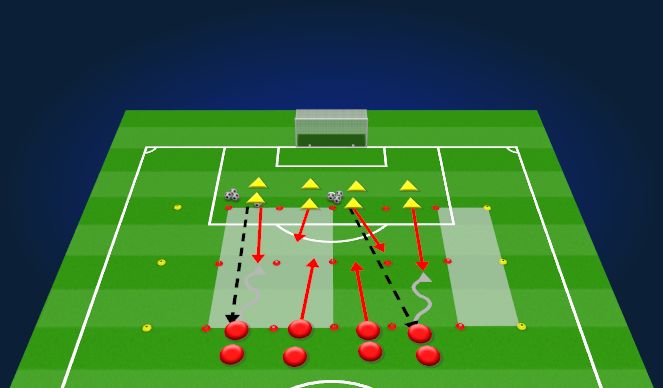
See the guidance at the top of this page to understand why you are not seeing interactive Football/Soccer images.
 Save Image:
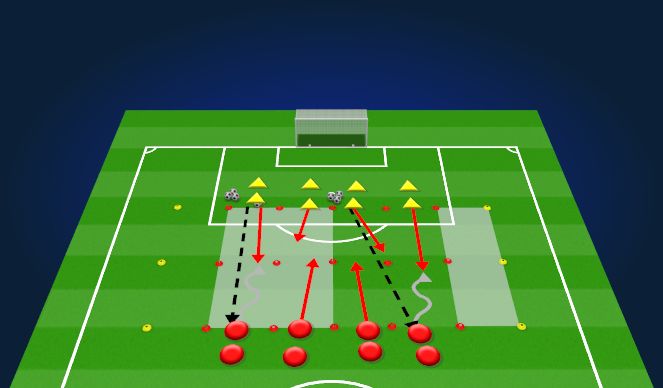
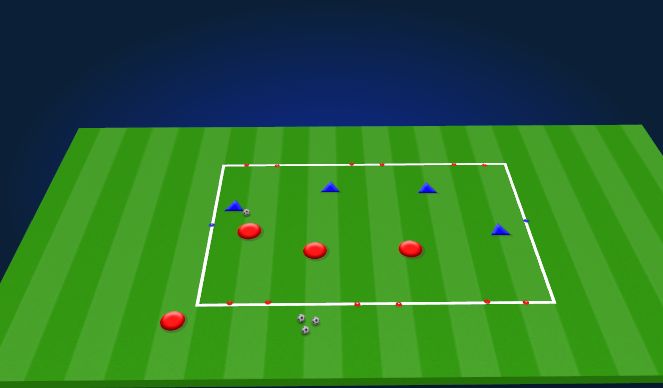
See the guidance at the top of this page to understand why you are not seeing interactive Football/Soccer images.
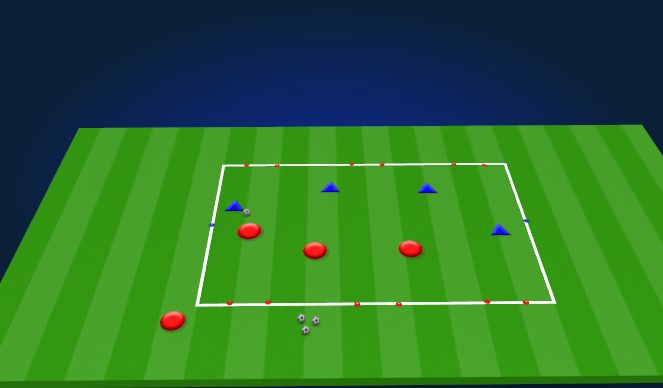
Teaching Collective Movement
Defensive Principle : Delay (Pressuring Defender) Deny (Cover Defenders)
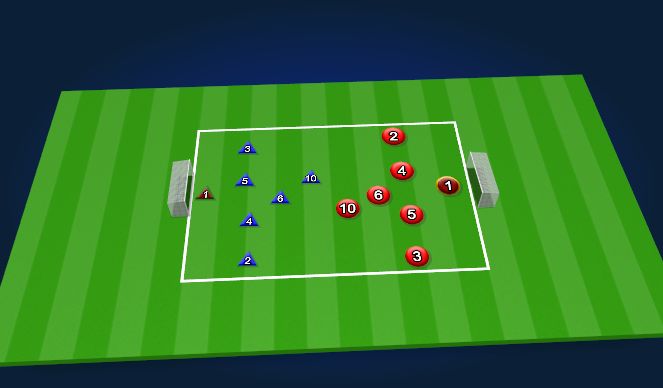
Aim: Defend the oncoming attackers using good group defensive skills forcing wide.
Rules:
- Split the team into 2 teams.
- The defensive team passes to the attacking team and looks to win the ball back and score in the dribble through goals. The PM team is simply trying to score in the oppositions goals to continue being the attacking team. Similarly to the last drill, if the RM team wins the ball and scores, they swap with the attacking team.
- Look to encourage 1st, 2nd and 3rd defender (Delay, Cover and Balance).
Key Points:
- Group Defending: Aim for the players to get comfortable being in a defensive line. If one player pushes forward as the 1st defender, can the 2nd and 3rd defender stay in position behind to protect the goal and create depth. Creating depth is important as if the ball is lost, we always have players behind that can defend on the front foot, simply put, we have coverage if the person applying pressure to the opposition ball carrier gets beaten.
- Individual Defensive Technical skills: Look to reinforce the skill taught in the previous activities
Variations-
- If the defending player wins the ball in the opposition's half, they can shoot to score, thus leading to quicker team rotations.
- Swapping if defender scores
Defensive tactical skills:
- 1st Defender (Delay): Player who first steps to apply pressure to the ball carrier using the individual defensive technical principals (Speed of approach, taking a passing option away, low hips, choppy feet)
- 2nd Defender (Cover): The player who keeps depth behind the 1st defender, who can stop penetrating actions or become the 1st defender if the original first defender was beaten.
- 3rd Defender (Balance): The player who helps maintain depth, and looks to help intercept penetrating actions and become the 1st defender if the opposition plays wide past the original 1st and 2nd defenders.
- Don't jump early: Encourage player not to jump before a pass is made, and to instead apply pressure only once the pass has been made.
- Protect the middle: Get players comfortable starting and staying centrally first and applying pressure once the ball has been played to a wide opposition player.
Terminology for young players:
- "Elbow buddy" (the player next to you)
- Start in the middle
- 5 steps (cover distance side to side and front to back with closest teammate
- No one gets around your front foot (angle of body to direct play)
Encourage:
- Team moves together
- Be aggressive to close space, but patient when close (Big steps when the ball is far away from the attacker and small steps when the ball is with the attacker)
- Protect central areas
- If opposition player is in a corner with back turned, look to double up (send two players) and win the ball.
- If beaten by attacker, don't give up and aim to win the ball back.
Coaching Points:
- Engage IP player high up the field
- Organize roles quickly and loudly
- Force outside
- Deny the split
- Furthest player is left with most space, but must be aware of position and movement
Player Actions:
- Big steps when ball is moving and far away, small, choppy steps when ball is at IP player and you are close
- Prevent IP player from going around RM player's front foot
- Quick recovery centrally when ball moves away from engaged IP player
See the guidance at the top of this page to understand why you are not seeing interactive Football/Soccer images.
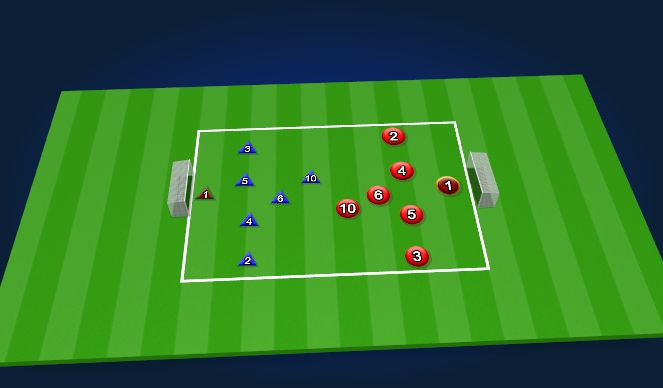
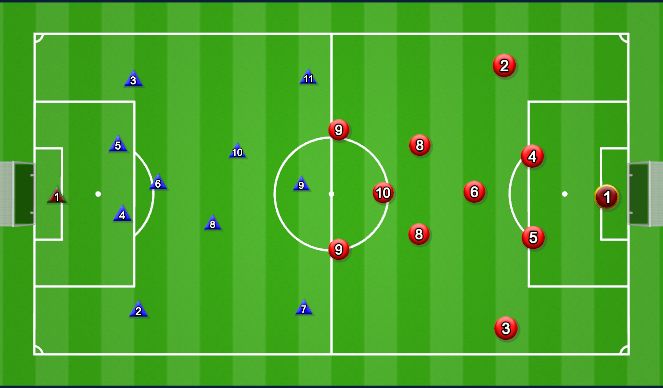
7v7 (4-2 v 4-2)
Defensive Principle : Delay (Pressuring Defender) Deny (Cover Defenders)
Aim: Defend the oncoming attackers using good group defensive skills forcing wide.
Rules:
- Split the team into 2 teams.
- Both teams set up in a 4-2 formation when RM and then can advance to a 2-3-1 when IP
- Play as a regular game
Key Points:
- Group Defending: Aim for the players to get comfortable being in layers of defensive lines. Team moves together as a unit (squeezing, shifting side to side, stepping up to reduce space between lines
Defensive tactical skills:
- 1st Defender (Delay): Player who first steps to apply pressure to the ball carrier using the individual defensive technical principals (Speed of approach, taking a passing option away, low hips, choppy feet)
- 2nd Defender (Cover): The player who keeps depth behind the 1st defender, who can stop penetrating actions or become the 1st defender if the original first defender was beaten.
- 3rd Defender (Balance): The player who helps maintain depth, and looks to help intercept penetrating actions and become the 1st defender if the opposition plays wide past the original 1st and 2nd defenders.
- Protect the middle: Get players comfortable starting and staying centrally first and applying pressure once the ball has been played to a wide opposition player.
Terminology for young players:
- "Elbow buddy" (the player next to you)
- Start in the middle
- 5 steps (cover distance side to side and front to back with closest teammate
- No one gets around your front foot (angle of body to direct play)
Encourage:
- Team moves together
- Be aggressive to close space, but patient when close (Big steps when the ball is far away from the attacker and small steps when the ball is with the attacker)
- Protect central areas
- If beaten by attacker, don't give up and aim to win the ball back.
Coaching Points:
- Engage IP player high up the field
- Organize roles quickly and loudly
- Force outside
- Deny the split
- Furthest player is left with most space, but must be aware of position and movement
Player Actions:
- Big steps when ball is moving and far away, small, choppy steps when ball is at IP player and you are close
- Prevent IP player from going around RM player's front foot
- Quick recovery centrally when ball moves away from engaged IP player
- Cover your "elbow buddy"
See the guidance at the top of this page to understand why you are not seeing interactive Football/Soccer images.
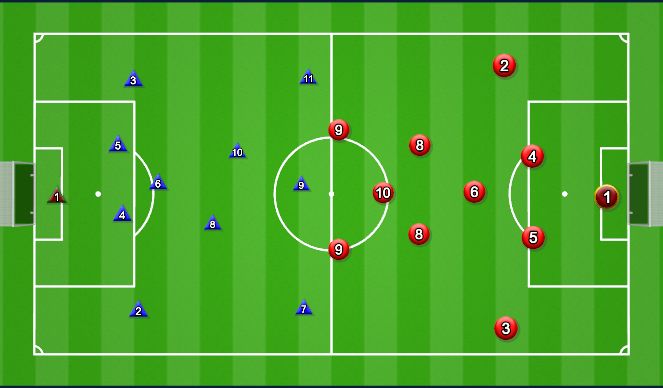
11v11
'%3E%3Cpath id='path4169' d='M 11.4375,70.25 C 11.457031,38.394531 37.277344,13.242188 68.253906,13.050781 99.78125,12.855469 125.73047,38.351563 125.8125,70.078125 125.89844,101.62109 100.43359,127.14063 69.148438,127.42188 37.582031,127.70703 11.464844,102.23438 11.4375,70.25 m 6.425781,-0.08984 c 0.03516,28.421871 23.027344,50.69922 50.519532,50.82031 C 96.433594,121.10156 119.30469,98.367188 119.38281,70.359375 119.45313,42.878906 97.382813,19.714844 69.015625,19.496094 40.75,19.277344 17.964844,42.035156 17.863281,70.160156' style='clip-rule:nonzero;fill:%23333f48;fill-opacity:1;fill-rule:nonzero;stroke:none' /%3E%3Cpath style='fill:%23333f48;fill-opacity:1;fill-rule:nonzero;stroke:none' d='m 39.789063,108.62109 c 0.28125,0.14454 0.550781,0.32032 0.839843,0.4336 2.734375,1.05469 5.554688,1.78125 8.453125,2.23047 2.734375,0.42578 5.484375,0.64453 8.25,0.54297 3.988282,-0.15625 7.832032,-0.94922 11.445313,-2.69532 1.683594,-0.8164 3.246094,-1.82422 4.640625,-3.07422 3.265625,-2.92578 5.171875,-6.582027 5.796875,-10.906246 0.546875,-3.761719 0.04687,-7.425781 -1.09375,-11.019531 -1.4375,-4.523438 -3.730469,-8.582032 -6.703125,-12.265625 -1.03125,-1.277344 -2.082031,-2.535157 -3.113281,-3.808594 C 66.789063,66.1875 65.332031,64.269531 64.0625,62.21875 c -1.601562,-2.582031 -2.835937,-5.316406 -3.613281,-8.261719 -0.683594,-2.574218 -0.902344,-5.1875 -0.6875,-7.828125 0.214844,-2.617187 0.910156,-5.117187 2.152344,-7.441406 2.164062,-4.050781 5.503906,-6.710937 9.816406,-8.179687 1.890625,-0.640625 3.835937,-1.058594 5.832031,-1.195313 1.121094,-0.07813 2.242188,-0.152344 3.363281,-0.164062 4.28125,-0.02734 8.4375,0.734375 12.453125,2.175781 1.871094,0.671875 3.6875,1.496094 5.523438,2.257812 0.226562,0.09375 0.4375,0.230469 0.664062,0.351563 -0.164062,0.25 -0.371093,0.160156 -0.539062,0.164062 -2.824219,0.101563 -5.535156,0.703125 -8.132813,1.804688 -1.335937,0.570312 -2.570312,1.316406 -3.648437,2.296875 -2.527344,2.296875 -3.605469,5.15625 -3.34375,8.550781 0.140625,1.855469 0.722656,3.574219 1.550781,5.222656 0.648438,1.296875 1.414063,2.523438 2.292969,3.675782 0.953125,1.25 1.929687,2.484375 2.929687,3.699218 2.085938,2.523438 4.164063,5.054688 6.050782,7.738282 2.203125,3.136718 4.140627,6.417968 5.589847,9.980468 1.16406,2.867188 2.01562,5.820313 2.39843,8.894532 0.25,2.011718 0.30079,4.03125 0.11719,6.058593 -0.24219,2.640625 -0.79297,5.195313 -1.74609,7.667969 -1.29688,3.36328 -3.300784,6.22656 -5.972659,8.63281 -2.429687,2.19141 -5.171875,3.90625 -8.109375,5.3125 -2.695312,1.29297 -5.464843,2.40235 -8.34375,3.20313 -1.953125,0.54687 -3.945312,0.8789 -5.949218,1.15625 -3.035157,0.41797 -6.085938,0.48828 -9.132813,0.3125 -5.328125,-0.3125 -10.476562,-1.46094 -15.410156,-3.52344 -3.449219,-1.44141 -6.691406,-3.25781 -9.757813,-5.39453 -0.183593,-0.12891 -0.378906,-0.25 -0.53125,-0.41016 -0.07031,-0.0703 -0.05859,-0.22656 -0.08203,-0.34375 z m 0,0' id='path4175' /%3E%3Cpath style='fill:%23333f48;fill-opacity:1;fill-rule:nonzero;stroke:none' d='M 94.699219,29.390625 C 94.089844,29.21875 93.476563,29.054688 92.867188,28.875 90.183594,28.085938 87.46875,27.441406 84.703125,27.046875 c -3.976562,-0.566406 -7.945312,-0.59375 -11.863281,0.402344 -7.535156,1.914062 -12.386719,6.71875 -14.878906,13.996094 -0.894532,2.617187 -1.179688,5.328125 -0.953125,8.078125 0.203125,2.484375 0.867187,4.859375 1.816406,7.160156 0.933594,2.261719 2.117187,4.390625 3.4375,6.449219 1.4375,2.25 3.050781,4.371093 4.640625,6.511718 1.4375,1.933594 2.867187,3.871094 4.261719,5.835938 1.230468,1.730469 2.316406,3.546875 3.273437,5.445312 1.324219,2.625 2.265625,5.378907 2.703125,8.292969 0.433594,2.902344 0.292969,5.765625 -0.660156,8.5625 -0.9375,2.74609 -2.574219,5.00781 -4.777344,6.875 -2.417969,2.04688 -5.203125,3.39844 -8.246094,4.22266 -1.835937,0.5 -3.703125,0.75781 -5.609375,0.82031 -3.886718,0.13281 -7.679687,-0.47266 -11.421875,-1.46094 -2.261718,-0.59765 -4.488281,-1.33203 -6.695312,-2.11328 -0.207031,-0.0742 -0.40625,-0.16797 -0.597656,-0.25 -0.02344,-0.24609 0.148437,-0.19141 0.25,-0.20703 1.96875,-0.30469 3.921875,-0.67969 5.804687,-1.34766 1.367188,-0.48437 2.671875,-1.10156 3.855469,-1.94922 2.25,-1.61328 3.65625,-3.765621 4.0625,-6.515621 0.273437,-1.867188 0.09375,-3.710938 -0.429688,-5.527344 -0.472656,-1.648437 -1.171875,-3.199219 -2.109375,-4.628906 -0.792968,-1.207031 -1.636718,-2.382813 -2.523437,-3.519531 -0.921875,-1.195313 -1.921875,-2.328125 -2.890625,-3.484375 -2.753906,-3.273438 -5.351563,-6.660157 -7.523438,-10.355469 -2.042968,-3.480469 -3.667968,-7.136719 -4.597656,-11.078125 -0.640625,-2.699219 -0.980469,-5.4375 -0.832031,-8.214844 0.238281,-4.53125 1.476562,-8.78125 3.824219,-12.6875 1.082031,-1.800781 2.445312,-3.375 3.988281,-4.800781 2.742187,-2.527344 5.863281,-4.480469 9.257812,-5.992188 3.746094,-1.667968 7.652344,-2.769531 11.707032,-3.394531 3.152343,-0.488281 6.324218,-0.671875 9.507812,-0.519531 8.632813,0.410156 16.671875,2.792969 24,7.433594 0.08203,0.05078 0.152344,0.109375 0.230469,0.167968 -0.0039,0.04297 -0.0078,0.08984 -0.01563,0.136719' id='path4177' /%3E%3Cpath style='fill:%23333f48;fill-opacity:1;fill-rule:nonzero;stroke:none' d='m 31.699219,38.75 c -0.07813,0.238281 -0.152344,0.476563 -0.238281,0.710938 -1.460938,4.074218 -2.066407,8.28125 -1.808594,12.59375 0.4375,7.304687 2.808594,13.925781 7.277344,19.753906 3.714843,4.84375 7.441406,9.671875 11.167968,14.503906 1.113282,1.441406 1.953125,3.007813 2.414063,4.777344 0.332031,1.257812 0.425781,2.539062 0.273437,3.820312 -0.214843,1.832032 -1.070312,3.34375 -2.464843,4.546875 -0.984375,0.851559 -2.113282,1.449219 -3.316407,1.925779 -1.378906,0.54297 -2.8125,0.89063 -4.273437,1.1211 -2.226563,0.35547 -4.46875,0.46093 -6.722656,0.41015 -0.589844,-0.0156 -1.046875,-0.18359 -1.433594,-0.625 -0.636719,-0.72265 -1.335938,-1.39062 -1.9375,-2.14062 C 25.574219,93.800781 22.300781,86.621094 20.84375,78.636719 20.152344,74.835938 19.917969,71 20.15625,67.128906 20.796875,56.773438 24.390625,47.574219 30.859375,39.480469 c 0.21875,-0.273438 0.453125,-0.53125 0.679688,-0.796875 0.05469,0.02344 0.109375,0.04297 0.160156,0.06641' id='path4179' /%3E%3Cpath style='fill:%23333f48;fill-opacity:1;fill-rule:nonzero;stroke:none' d='m 105.41016,101.30078 c -0.13282,-0.3125 0.0234,-0.5039 0.0977,-0.69922 1.38672,-3.749997 1.98047,-7.628904 1.89844,-11.621091 -0.14453,-6.84375 -2.08594,-13.144531 -5.73437,-18.925781 C 99.890625,67.226563 97.917969,64.53125 95.835938,61.917969 94.4375,60.160156 92.988281,58.4375 91.582031,56.6875 90.632813,55.511719 89.6875,54.335938 88.792969,53.121094 c -0.835938,-1.144531 -1.488281,-2.398438 -1.953125,-3.742188 -0.523438,-1.515625 -0.695313,-3.070312 -0.511719,-4.652343 0.21875,-1.839844 1.082031,-3.339844 2.476563,-4.542969 1.039062,-0.890625 2.230468,-1.507813 3.503906,-1.980469 1.632812,-0.609375 3.320312,-0.960937 5.046875,-1.175781 1.917969,-0.238281 3.839841,-0.269531 5.769531,-0.230469 0.52734,0.01172 0.89453,0.203125 1.23828,0.585938 5.50391,6.113281 9.26172,13.144531 11.21875,21.132812 1.11719,4.554688 1.5625,9.179688 1.30469,13.855469 -0.58203,10.625 -4.23438,20.082031 -10.96094,28.339846 -0.15625,0.1914 -0.32812,0.375 -0.51562,0.58984' id='path4181' /%3E%3Cpath style='fill:%23333f48;fill-opacity:1;fill-rule:nonzero;stroke:none' d='m 39.796875,108.63281 c -0.05859,0.0117 -0.117187,0.0234 -0.175781,0.0352 0.05469,-0.0156 0.113281,-0.0312 0.167969,-0.0469 z m 0,0' id='path4183' /%3E%3C/g%3E%3C/svg%3E)
 Play animation
 Play step-by-step
 Repeat (toggle)
 Full Screen
 Pause
Pause Stop
Stop
Teaching Cover
Similar to the previous activity the Principle of Pressure is still key, as whoever is pressing, determines what their teammates will look to do.
As a general rule: IF YOUR TEAMMATE NEXT TO YOU IS PRESSING, YOU SHOULD TAKE-UP A COVERING POSITION
The Cover Principle of Defence is crucial when defending as a team, because it prevents opponents from easily splitting defensive lines.
Cover Principle has two main functions:
1 - Prevent opposition progression balls
2 - Take the role of Pressure, if my pressuring teammate gets beaten
Should the pressuring player keep good pressure as attacker moves into another teammate's channel, and leave their channel empty, the covering player should decide to (preferably) double-team the attacker or drop cover slightly to still cover passing line to the now-open channel. Ideally, the two should pressure together to win the ball in the 2v1.
Ball can be played to either of the attackers, and then defender in that channel should become the pressure immediately, and the other player takes up the cover role.
Play conclusion:
1) Win the ball and dribble over endline
2) Win the ball and retain possession by playing it back
3) Ball leaves the channel
4) Defender gets beaten and attacker dribbles over endline
Size:
Combine two channels together from previous activity *If used (each channel was 12-15 yds long x 5-8 yards wide)
Coaching Points:
- Engage IP player high up the field
- Organize roles quickly and loudly
- Force outside
- Deny the split
Player Actions:
- Big steps when ball is moving and far away, small, choppy steps when ball is at IP player and you are close
- Prevent IP player from going around RM player's front foot
- Quick recovery centrally when ball moves away from engaged IP player