


Football/Soccer Session (Academy Sessions): week 2 term 2 1v1


Peninsula Power FC
John Harmis
Profile Summary

| Name: | John Harmis |
|---|---|
| City: | Clontarf |
| Country: | Australia |
| Membership: | Adult Member |
| Sport: | Football/Soccer |

Description
Session Objective:
See the guidance at the top of this page to understand why you are not seeing interactive Football/Soccer images.
 Save Image:
See the guidance at the top of this page to understand why you are not seeing interactive Football/Soccer images.
Save Image:
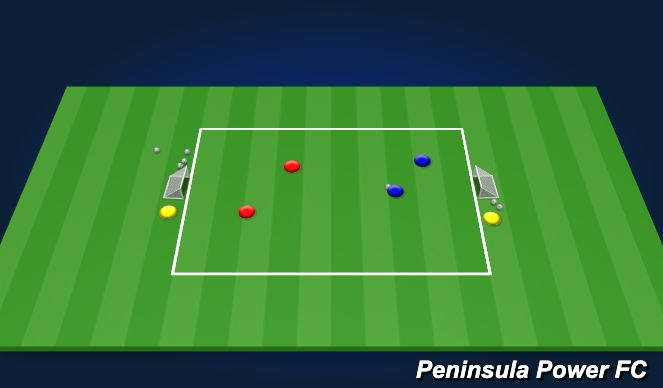
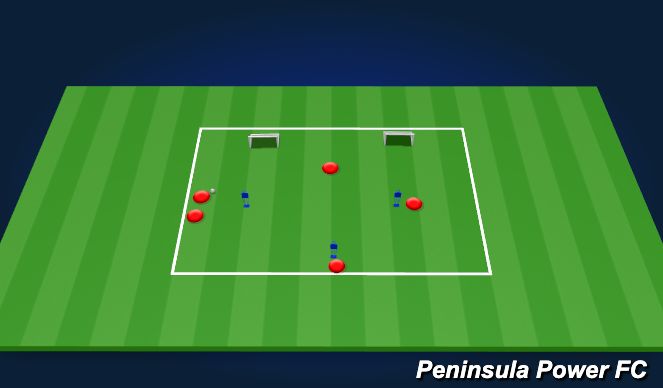
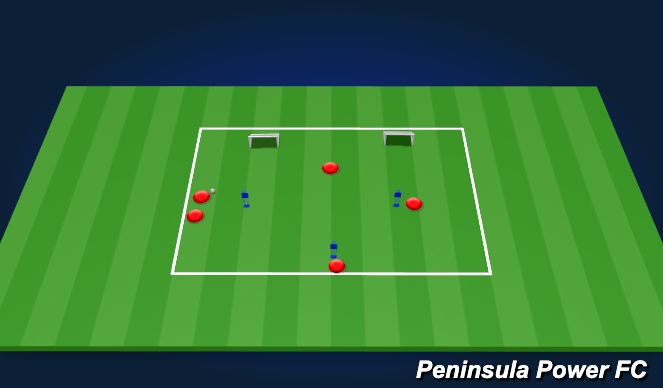
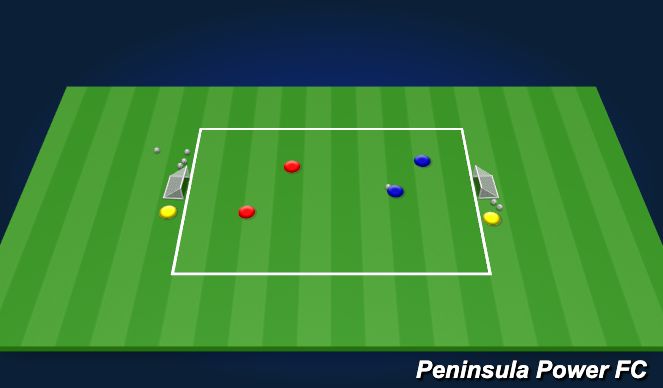
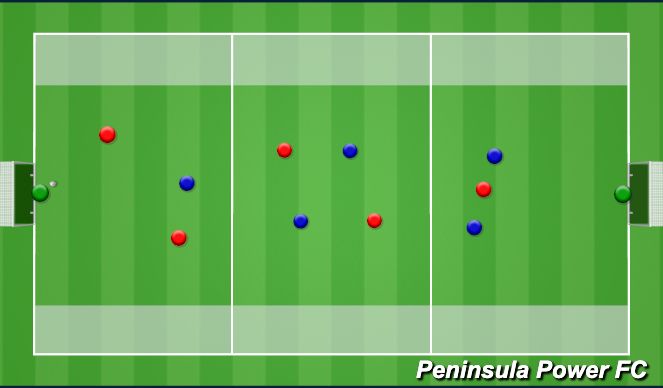
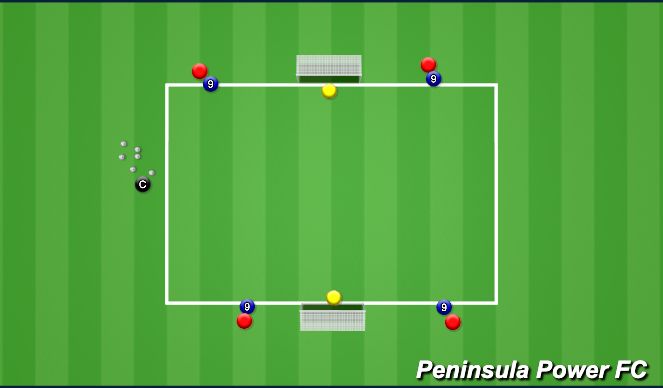
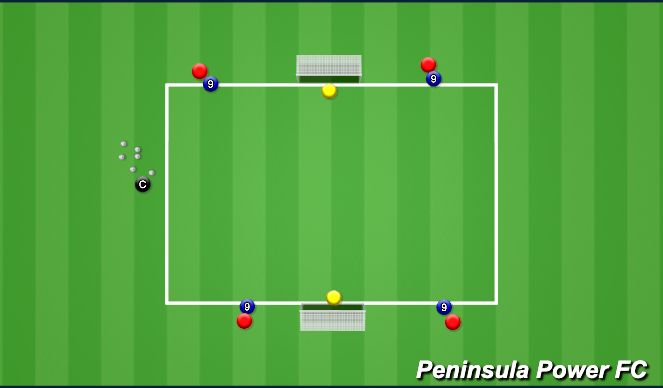
2v2 with bounces
Setup
Area: 20x15m (adjust based on age/ability).
2v2 in central zone.
2 neutral “bounce” players on sidelines (1 each side).
Bounce players rotate/swap every 2 mins.
One goal each end (or mini goals for quicker play).
Timing
20 mins total.
4 x 5-minute rounds, 1-minute rest/swap between.
Bounce players change every 2 minutes within a round.
Organisation
Game starts 2v2.
Players encouraged to use bounce players to combine, switch play or draw defender out.
Goals scored in mini goals or small target goals.
Bounce players can only play one-touch to increase intensity (optional).
Bounce players cannot be tackled – they’re support only.
Coaching Points
Create Space – movement off the ball to drag defenders, open lanes.
Use the Bounce Smartly – quick combinations or to escape pressure.
Positive 1v1 Mindset – commit the defender, be creative.
Body Orientation – receive side-on, ready to play quickly.
Defending in Pairs – communication, pressure/cover balance.
Progression
Start with free touches for all players (get comfortable).
Limit bounce players to 1 touch – encourages quick decision-making.
Add scoring conditions: e.g. must use a bounce before scoring.
Add bonus point for 1v1 goal – encourages players to take defenders on.
Switch bounce players into the game every round to keep engagement high.
See the guidance at the top of this page to understand why you are not seeing interactive Football/Soccer images.
Save Image:
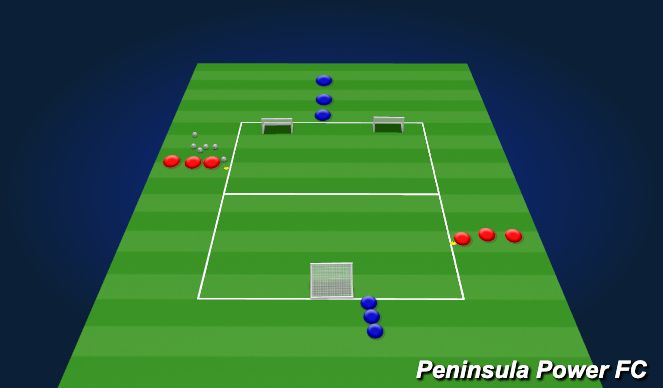
1v1/1v1
Setup
2 adjacent grids (20x15m each).
1 mini goal in Grid A, 2 mini goals in Grid B.
Players start on sidelines, 1 player in each grid at a time.
Ball starts with player on sideline of Grid A, who passes into opposite side for 1v1.
Timing
15–20 mins total.
4 x 3-minute rounds (with 1 min reset/rest).
Rotate attacking/defending roles and resting players.
Organisation
Player on Grid A sideline passes across into opposite player to begin 1v1.
Attacker can try to beat their man and score in 1 mini goal.
If nothing on, they can switch play to Grid B — where their teammate waits and starts a new 1v1.
In Grid B, the attacker has 2 mini goals to score in.
Defenders try to win it and play out or stop the attack.
Coaching Points
Weight and angle of pass – into the right foot or space.
Attacking 1v1 mentality – positive first touch, change of pace.
Decision making – when to take on, when to pass.
Supporting angle – teammate in Grid B needs to be ready on toes.
Defending 1v1 – stay low, force wide, time your challenge.
Progression
Start with free play – let them get used to the switch.
Add time limit to score after receiving – e.g. 5 seconds.
Award extra points for individual 1v1 goals (no switch).
Make switch-pass first-time only to increase sharpness.
Final round: winner stays on — creates intensity and motivation.
See the guidance at the top of this page to understand why you are not seeing interactive Football/Soccer images.
Save Image:
5v5 with 1v1 zones
Setup
Pitch: 40x30m (or half pitch)
Full goals with goalkeepers.
5v5 in central area (including keepers).
Two wide vertical channels (about 5m wide) marked down each wing.
Only 1 player per team allowed in each wide channel at a time.
Supply of balls with GKs or coach.
Timing
20–25 mins total.
3–4 min rounds x 4–5 sets.
Rotate wing players and resting subs if needed.
Organisation
Game plays as a normal 5v5 in the central area.
Players are encouraged to work the ball wide into a wing zone.
Once a wide player enters their channel, they go 1v1 against the opponent who also enters.
If they beat their defender, the goal is to deliver a cutback or cross for teammates in the central area to finish.
Wing players rotate in/out with each wave or coach's call.
Coaching Points
Create & Recognise Wide Overload – find the right moment to play wide.
1v1 Wing Play – quick feet, body feints, aggressive mindset.
Timing of Runs into Box – attackers in central area must arrive at the right time.
Quality of Cutback – pick out a teammate, don’t just cross blindly.
Recovery Runs – defenders must react to prevent the cutback.
Progression
Unlimited touches to begin.
Limit wide players to 5 seconds in the zone to encourage quick decisions.
Add bonus point for goals scored from cutbacks.
Allow only 1 entry pass into the wide zone per attack – adds decision pressure.
Final round: if a wide player beats their man, they must shoot or pass in 5 seconds.
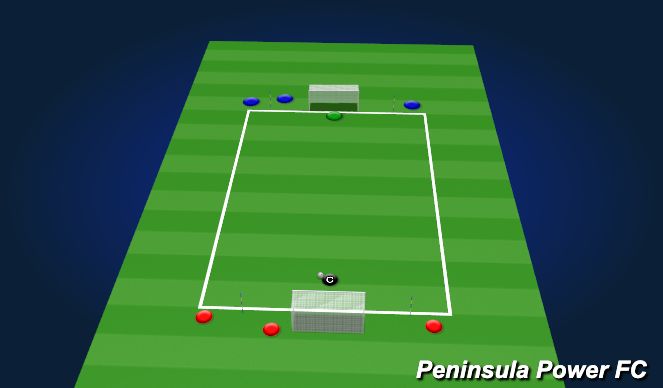
See the guidance at the top of this page to understand why you are not seeing interactive Football/Soccer images.
Save Image:
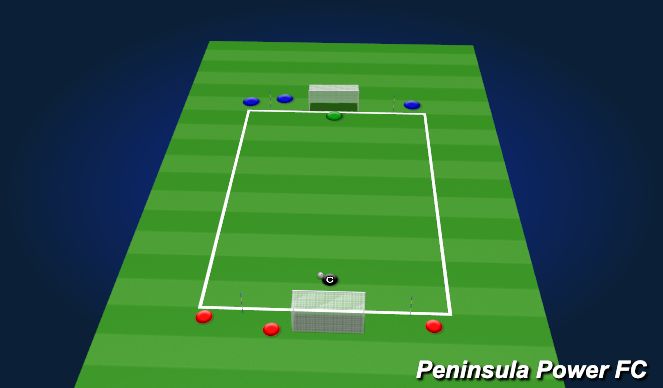
3v3 conditioning
Setup
Area: 25x20m grid (adjust as needed).
2 teams of 3 players each.
2 full-size or mini goals.
3 poles or cones set 5–8m behind each team's starting line.
Supply of balls with coach or near halfway.
Timing
20 mins total.
90 seconds per game (or first to score).
6–8 rounds, rotate fresh players if needed.
10–15 sec recovery between rounds.
Organisation
Teams line up on opposite ends of the field.
On coach’s whistle, players sprint forward, loop around the pole in front of them, and immediately get into a 3v3 game.
Play is live until a goal is scored.
After the goal, players reset back to original positions and complete another sprint.
Winning team from last round restarts with the ball (advantage reward).
☑️ Coaching Points
Sharp Sprint Technique – stay low, drive with arms, explode out of turns.
Quick Transition Focus – switch from sprint to game mode fast.
Decision Making Under Fatigue – good choices despite tired legs.
Defensive Shape Early – recover and organize after sprint.
Positive Attacking Play – drive forward, commit defenders, look to finish.
Progression
Add time limit for each possession (e.g., 15 seconds to score).
Introduce “2-pass minimum” before a shot to encourage combination play.
Rotate a floater or neutral to create 4v3 overloads.
Use different sprint patterns (shuffle, backpedal, diagonal) to mix conditioning.
Make final round winner stays on for competitive intensity.
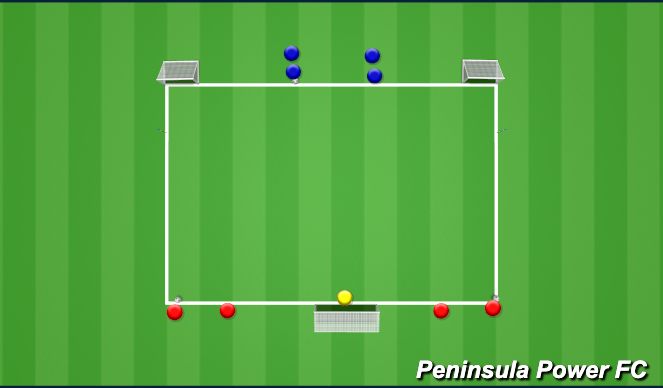
See the guidance at the top of this page to understand why you are not seeing interactive Football/Soccer images.
Save Image:
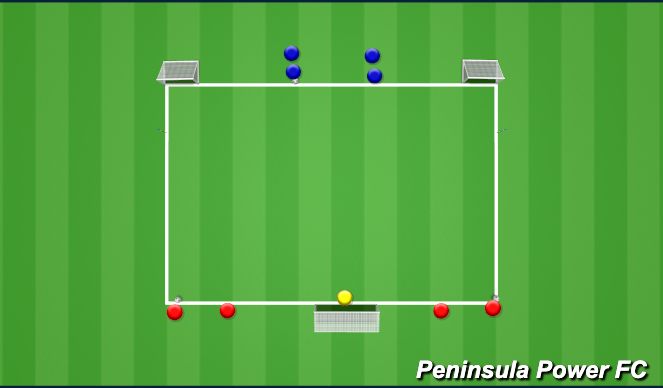
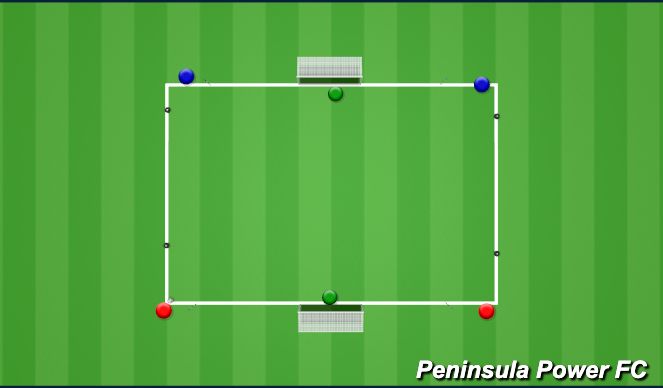
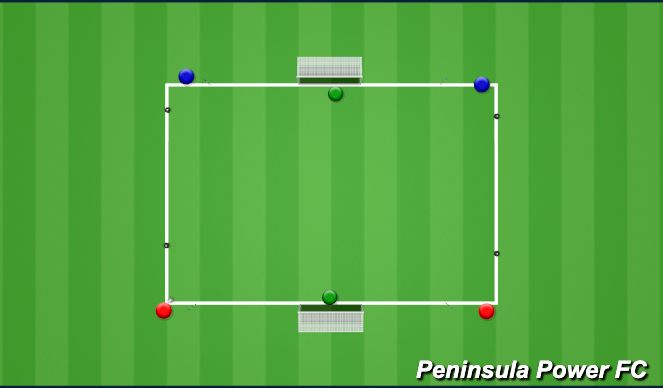
1v1 unopposed to 2v2
Setup
Area: 30x20 yard grid split into 3 vertical zones (1 central & 2 wide)
1 goal with a goalkeeper at one end
2 mini goals in each wide zone on the opposite end
2 attackers (A1 & A2) start centrally
2 defenders (D1 & D2) positioned centrally
Additional players in wide zones ready for Phase 2
Organisation
Phase 1 – 2v2 Attack
Play begins with a 2v2 in the central zone.
The attacking pair works to create a goal-scoring opportunity in the main goal.
Once a goal is scored or the ball goes dead, Phase 2 begins.
Phase 2 – 1v1 Defending
4. The 2 attackers from Phase 1 now transition quickly to opposite wide zones.
5. In each wide zone, a new attacker drives in 1v1 toward the mini goal.
6. The original attackers must now defend individually in a 1v1 scenario.
7. The practice resets with a new group of 4 in the middle.
Timing
Each phase lasts until a goal or ball out
Rotate groups every few minutes for high tempo and engagement
Coaching Points
Phase 1 (2v2)
Timing of combination play and movement off the ball
Quick decision-making to take advantage of space
Quality finishing
Phase 2 (1v1 Defending)
Transition with urgency and get goal-side early
Body shape and positioning to delay and force wide
Timing of tackles – don’t dive in
General
Awareness: attack with purpose, defend with pride
Physical recovery – sprint both ways
Communication and body language in transition
Progressions
Give wide attackers a time limit (e.g. 5 seconds) to shoot
Introduce a recovering third defender into the central phase
Allow defenders to score in mini goals if they win possession in Phase 2
Add bounce players for central wall passes
See the guidance at the top of this page to understand why you are not seeing interactive Football/Soccer images.
Save Image:
1v2/2v2 transition game
Setup
Area: 30x25m (or half pitch).
One main goal with a goalkeeper at one end.
One big goal or target zone at the opposite end for defenders to counter into.
Players divided into attackers and defenders.
Coach or player starts each rep with the ball.
Timing
20 minutes total.
10 mins 1v2 phase.
10 mins 2v2 phase.
Rotate players every 3–4 reps.
Organisation
???? 1v2 Phase
Defender starts by dribbling upfield and passing into the attacker (who’s positioned near the edge of the final third).
As soon as the pass is played, it’s live – attacker tries to drive 1v1 toward goal.
A second defender recovers from behind play, turning it into a 1v2.
If defenders win the ball, they counter and attempt to score in the big goal at the opposite end.
???? 2v2 Phase
Starts the same – defender passes into two attackers.
Attackers begin with a brief 2v1 advantage.
Second defender recovers and evens it up to a 2v2.
If defenders win it, they can break out and attack the big goal on the opposite end.
Coaching Points
Attackers:
Attack quickly before pressure arrives.
Use combination play or decisive dribbling.
Shoot early if space opens up.
Defenders:
Recover at a good angle – not straight line chasing.
Delay play until support arrives.
Transition mindset: win and break quickly to attack big goal.
Both:
Stay compact or spread out based on phase of play.
Communicate constantly (especially defenders).
Progression
Add a time limit to score (e.g. 8 seconds).
Limit defenders to 3 touches when countering – simulates real urgency.
Allow defenders to play wide players or bounce passes off neutral players.
Reward bonus point for attackers if they score before second defender engages.
Rotate who starts with the ball – defenders or coach mix it up.
See the guidance at the top of this page to understand why you are not seeing interactive Football/Soccer images.
Save Image:
continuous 3v3s
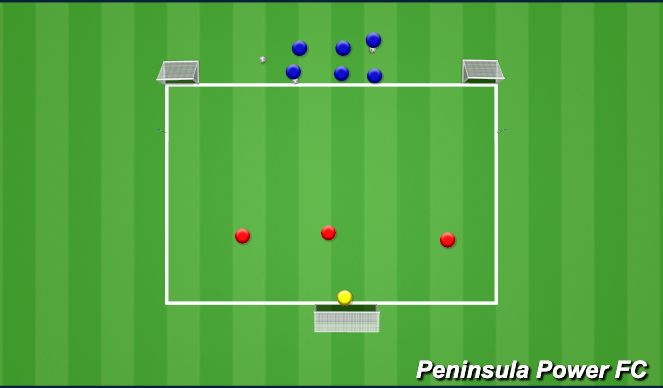
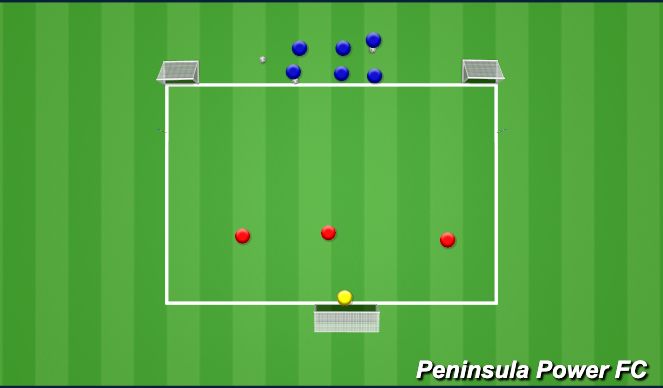
Setup
Area: Half-pitch or a 30x20 yard grid
1 full-sized goal with a goalkeeper
2 mini goals located at the end of the grid (on the sides of the full-sized goal)
3 attackers (Team A) in the central area
3 defenders (Team B) in the central area, also defending the full-sized goal
Organisation
The game starts with 3v3 in the middle of the field, with Team A attacking the main goal and Team B defending.
Team A (attackers) attempts to score in the main goal.
Team B (defenders) aims to win possession and then score in one of the 2 mini goals on either side of the field.
If Team A scores, Team B stays as defenders, and the play continues with the ball being passed back into play from the goalkeeper.
The only way Team B (defenders) can transition to attack is by winning possession from Team A and scoring in one of the mini goals.
Play continues in this cycle until the coach decides to rotate teams or stop the drill for feedback.
Timing
Continuous play: no stoppage unless a goal is scored or ball out
Play for 3–5 minutes before switching defenders and attackers
Coaching Points
Attacking Team:
Speed of play: Quick combinations to break the defense
Movement off the ball: Support the ball carrier and create space
Clinical finishing: Take advantage of goal-scoring opportunities
Defending Team:
Pressing as a unit: Press aggressively when possible, delay when needed
Transition to attack: Once possession is won, quickly look to counter and score in mini goals
Defensive shape: Keep the defensive structure intact to prevent goals
Communication: Constantly talk and organize as a unit to prevent quick attacks
Progressions
Add a neutral player (e.g., on the attacking team) who can assist in quick transitions.
Allow defenders to play out from the mini goals after scoring, providing a full transition experience.
If defenders win possession, require them to play two passes before attempting to score in the mini goals.
See the guidance at the top of this page to understand why you are not seeing interactive Football/Soccer images.
Save Image:
1v1 back to goal
Setup
Area: 15x15 yard grid or inside the penalty box
1 goal with a goalkeeper (behind where the attacker starts)
1 goal for the defender to score in (opposite side of the field)
1 attacker (A)
1 defender (D)
Cones or markers to outline the area and starting points for both players
Organisation
The attacker (A) starts outside the box or at a designated point and runs into the box with their back to goal.
The defender (D) starts slightly behind or beside the attacker, applying pressure as the attacker receives the ball.
The attacker receives the ball with their back to goal and must then evade the defender using their skills, such as a quick turn, feint, or dribble.
If the attacker manages to evade the defender, they will attempt to score in the goal located behind them.
If the defender wins the ball, they will immediately counter-attack and attempt to score in the opposite goal (from the attacker’s starting position).
Once a goal is scored or the ball goes out, reset and switch roles (attacker becomes defender and vice versa).
Timing
Play each round for 1 minute before switching roles.
Rotate every few minutes to ensure all players get multiple turns.
Coaching Points
Attacker:
First touch: Control the ball into space, away from the defender
Body positioning: Stay balanced and ready to turn quickly
Evasion techniques: Use body fakes, quick pivots, and changes of direction to shake off the defender
Finishing: Focus on a calm, controlled finish after evading the defender
Defender:
Pressuring without diving in: Stay tight to the attacker but don’t overcommit
Staying disciplined: Position yourself well to prevent the attacker from turning easily
Counter-attacking: Once possession is won, move quickly to transition to the opposite goal
Tackling: Focus on timing and choosing when to challenge the attacker
Progressions
Add a second defender or defensive pressure from a wider angle to force the attacker into quicker decisions.
After evading the first defender, the attacker must pass to a second player (e.g., a teammate or another neutral) before shooting to increase complexity.
Make the attacker receive the ball with one touch to develop quicker reactions and control under pressure.
Add limited time (e.g., 5 seconds) for the attacker to score after receiving the ball to increase urgency.
'%3E%3Cpath id='path4169' d='M 11.4375,70.25 C 11.457031,38.394531 37.277344,13.242188 68.253906,13.050781 99.78125,12.855469 125.73047,38.351563 125.8125,70.078125 125.89844,101.62109 100.43359,127.14063 69.148438,127.42188 37.582031,127.70703 11.464844,102.23438 11.4375,70.25 m 6.425781,-0.08984 c 0.03516,28.421871 23.027344,50.69922 50.519532,50.82031 C 96.433594,121.10156 119.30469,98.367188 119.38281,70.359375 119.45313,42.878906 97.382813,19.714844 69.015625,19.496094 40.75,19.277344 17.964844,42.035156 17.863281,70.160156' style='clip-rule:nonzero;fill:%23333f48;fill-opacity:1;fill-rule:nonzero;stroke:none' /%3E%3Cpath style='fill:%23333f48;fill-opacity:1;fill-rule:nonzero;stroke:none' d='m 39.789063,108.62109 c 0.28125,0.14454 0.550781,0.32032 0.839843,0.4336 2.734375,1.05469 5.554688,1.78125 8.453125,2.23047 2.734375,0.42578 5.484375,0.64453 8.25,0.54297 3.988282,-0.15625 7.832032,-0.94922 11.445313,-2.69532 1.683594,-0.8164 3.246094,-1.82422 4.640625,-3.07422 3.265625,-2.92578 5.171875,-6.582027 5.796875,-10.906246 0.546875,-3.761719 0.04687,-7.425781 -1.09375,-11.019531 -1.4375,-4.523438 -3.730469,-8.582032 -6.703125,-12.265625 -1.03125,-1.277344 -2.082031,-2.535157 -3.113281,-3.808594 C 66.789063,66.1875 65.332031,64.269531 64.0625,62.21875 c -1.601562,-2.582031 -2.835937,-5.316406 -3.613281,-8.261719 -0.683594,-2.574218 -0.902344,-5.1875 -0.6875,-7.828125 0.214844,-2.617187 0.910156,-5.117187 2.152344,-7.441406 2.164062,-4.050781 5.503906,-6.710937 9.816406,-8.179687 1.890625,-0.640625 3.835937,-1.058594 5.832031,-1.195313 1.121094,-0.07813 2.242188,-0.152344 3.363281,-0.164062 4.28125,-0.02734 8.4375,0.734375 12.453125,2.175781 1.871094,0.671875 3.6875,1.496094 5.523438,2.257812 0.226562,0.09375 0.4375,0.230469 0.664062,0.351563 -0.164062,0.25 -0.371093,0.160156 -0.539062,0.164062 -2.824219,0.101563 -5.535156,0.703125 -8.132813,1.804688 -1.335937,0.570312 -2.570312,1.316406 -3.648437,2.296875 -2.527344,2.296875 -3.605469,5.15625 -3.34375,8.550781 0.140625,1.855469 0.722656,3.574219 1.550781,5.222656 0.648438,1.296875 1.414063,2.523438 2.292969,3.675782 0.953125,1.25 1.929687,2.484375 2.929687,3.699218 2.085938,2.523438 4.164063,5.054688 6.050782,7.738282 2.203125,3.136718 4.140627,6.417968 5.589847,9.980468 1.16406,2.867188 2.01562,5.820313 2.39843,8.894532 0.25,2.011718 0.30079,4.03125 0.11719,6.058593 -0.24219,2.640625 -0.79297,5.195313 -1.74609,7.667969 -1.29688,3.36328 -3.300784,6.22656 -5.972659,8.63281 -2.429687,2.19141 -5.171875,3.90625 -8.109375,5.3125 -2.695312,1.29297 -5.464843,2.40235 -8.34375,3.20313 -1.953125,0.54687 -3.945312,0.8789 -5.949218,1.15625 -3.035157,0.41797 -6.085938,0.48828 -9.132813,0.3125 -5.328125,-0.3125 -10.476562,-1.46094 -15.410156,-3.52344 -3.449219,-1.44141 -6.691406,-3.25781 -9.757813,-5.39453 -0.183593,-0.12891 -0.378906,-0.25 -0.53125,-0.41016 -0.07031,-0.0703 -0.05859,-0.22656 -0.08203,-0.34375 z m 0,0' id='path4175' /%3E%3Cpath style='fill:%23333f48;fill-opacity:1;fill-rule:nonzero;stroke:none' d='M 94.699219,29.390625 C 94.089844,29.21875 93.476563,29.054688 92.867188,28.875 90.183594,28.085938 87.46875,27.441406 84.703125,27.046875 c -3.976562,-0.566406 -7.945312,-0.59375 -11.863281,0.402344 -7.535156,1.914062 -12.386719,6.71875 -14.878906,13.996094 -0.894532,2.617187 -1.179688,5.328125 -0.953125,8.078125 0.203125,2.484375 0.867187,4.859375 1.816406,7.160156 0.933594,2.261719 2.117187,4.390625 3.4375,6.449219 1.4375,2.25 3.050781,4.371093 4.640625,6.511718 1.4375,1.933594 2.867187,3.871094 4.261719,5.835938 1.230468,1.730469 2.316406,3.546875 3.273437,5.445312 1.324219,2.625 2.265625,5.378907 2.703125,8.292969 0.433594,2.902344 0.292969,5.765625 -0.660156,8.5625 -0.9375,2.74609 -2.574219,5.00781 -4.777344,6.875 -2.417969,2.04688 -5.203125,3.39844 -8.246094,4.22266 -1.835937,0.5 -3.703125,0.75781 -5.609375,0.82031 -3.886718,0.13281 -7.679687,-0.47266 -11.421875,-1.46094 -2.261718,-0.59765 -4.488281,-1.33203 -6.695312,-2.11328 -0.207031,-0.0742 -0.40625,-0.16797 -0.597656,-0.25 -0.02344,-0.24609 0.148437,-0.19141 0.25,-0.20703 1.96875,-0.30469 3.921875,-0.67969 5.804687,-1.34766 1.367188,-0.48437 2.671875,-1.10156 3.855469,-1.94922 2.25,-1.61328 3.65625,-3.765621 4.0625,-6.515621 0.273437,-1.867188 0.09375,-3.710938 -0.429688,-5.527344 -0.472656,-1.648437 -1.171875,-3.199219 -2.109375,-4.628906 -0.792968,-1.207031 -1.636718,-2.382813 -2.523437,-3.519531 -0.921875,-1.195313 -1.921875,-2.328125 -2.890625,-3.484375 -2.753906,-3.273438 -5.351563,-6.660157 -7.523438,-10.355469 -2.042968,-3.480469 -3.667968,-7.136719 -4.597656,-11.078125 -0.640625,-2.699219 -0.980469,-5.4375 -0.832031,-8.214844 0.238281,-4.53125 1.476562,-8.78125 3.824219,-12.6875 1.082031,-1.800781 2.445312,-3.375 3.988281,-4.800781 2.742187,-2.527344 5.863281,-4.480469 9.257812,-5.992188 3.746094,-1.667968 7.652344,-2.769531 11.707032,-3.394531 3.152343,-0.488281 6.324218,-0.671875 9.507812,-0.519531 8.632813,0.410156 16.671875,2.792969 24,7.433594 0.08203,0.05078 0.152344,0.109375 0.230469,0.167968 -0.0039,0.04297 -0.0078,0.08984 -0.01563,0.136719' id='path4177' /%3E%3Cpath style='fill:%23333f48;fill-opacity:1;fill-rule:nonzero;stroke:none' d='m 31.699219,38.75 c -0.07813,0.238281 -0.152344,0.476563 -0.238281,0.710938 -1.460938,4.074218 -2.066407,8.28125 -1.808594,12.59375 0.4375,7.304687 2.808594,13.925781 7.277344,19.753906 3.714843,4.84375 7.441406,9.671875 11.167968,14.503906 1.113282,1.441406 1.953125,3.007813 2.414063,4.777344 0.332031,1.257812 0.425781,2.539062 0.273437,3.820312 -0.214843,1.832032 -1.070312,3.34375 -2.464843,4.546875 -0.984375,0.851559 -2.113282,1.449219 -3.316407,1.925779 -1.378906,0.54297 -2.8125,0.89063 -4.273437,1.1211 -2.226563,0.35547 -4.46875,0.46093 -6.722656,0.41015 -0.589844,-0.0156 -1.046875,-0.18359 -1.433594,-0.625 -0.636719,-0.72265 -1.335938,-1.39062 -1.9375,-2.14062 C 25.574219,93.800781 22.300781,86.621094 20.84375,78.636719 20.152344,74.835938 19.917969,71 20.15625,67.128906 20.796875,56.773438 24.390625,47.574219 30.859375,39.480469 c 0.21875,-0.273438 0.453125,-0.53125 0.679688,-0.796875 0.05469,0.02344 0.109375,0.04297 0.160156,0.06641' id='path4179' /%3E%3Cpath style='fill:%23333f48;fill-opacity:1;fill-rule:nonzero;stroke:none' d='m 105.41016,101.30078 c -0.13282,-0.3125 0.0234,-0.5039 0.0977,-0.69922 1.38672,-3.749997 1.98047,-7.628904 1.89844,-11.621091 -0.14453,-6.84375 -2.08594,-13.144531 -5.73437,-18.925781 C 99.890625,67.226563 97.917969,64.53125 95.835938,61.917969 94.4375,60.160156 92.988281,58.4375 91.582031,56.6875 90.632813,55.511719 89.6875,54.335938 88.792969,53.121094 c -0.835938,-1.144531 -1.488281,-2.398438 -1.953125,-3.742188 -0.523438,-1.515625 -0.695313,-3.070312 -0.511719,-4.652343 0.21875,-1.839844 1.082031,-3.339844 2.476563,-4.542969 1.039062,-0.890625 2.230468,-1.507813 3.503906,-1.980469 1.632812,-0.609375 3.320312,-0.960937 5.046875,-1.175781 1.917969,-0.238281 3.839841,-0.269531 5.769531,-0.230469 0.52734,0.01172 0.89453,0.203125 1.23828,0.585938 5.50391,6.113281 9.26172,13.144531 11.21875,21.132812 1.11719,4.554688 1.5625,9.179688 1.30469,13.855469 -0.58203,10.625 -4.23438,20.082031 -10.96094,28.339846 -0.15625,0.1914 -0.32812,0.375 -0.51562,0.58984' id='path4181' /%3E%3Cpath style='fill:%23333f48;fill-opacity:1;fill-rule:nonzero;stroke:none' d='m 39.796875,108.63281 c -0.05859,0.0117 -0.117187,0.0234 -0.175781,0.0352 0.05469,-0.0156 0.113281,-0.0312 0.167969,-0.0469 z m 0,0' id='path4183' /%3E%3C/g%3E%3C/svg%3E)
 Play animation
 Play step-by-step
 Repeat (toggle)
 Full Screen
 Pause
Pause Stop
Stop
1v1 warmup practice
Setup
3 mannequins (or poles/cones) in a zig-zag or triangle shape.
Players in a line at the start cone.
2 mini goals at the end of the sequence for 1v1.
Final player at the end acts as a defender.
Space needed: 20x15m
Timing
10–15 mins total.
Players rotate through all stations.
Go for 60 seconds, quick reset, then go again.
Organisation
Player starts with a pass and plays a one-two around mannequin 1.
Then quickly repeats a one-two around mannequin 2.
Final one-two around mannequin 3.
After the final pass, the attacker drives into a 1v1 against the defender waiting near the mini goals.
Attack finishes with a shot into either of the 2 mini goals.
Players follow their pass, rotating through all stations (passer becomes wall-player, wall-player becomes attacker, defender rotates back to start).
Coaching Points
Quality of pass – weight and accuracy, hit the correct foot.
Movement after pass – quick and explosive around mannequins.
Timing of one-twos – stay connected and sharp.
1v1 mentality – positive touch, pick the right moment to attack.
Defensive shape – for the defender, low stance, delay first.
Progression
Start unopposed – just passing and finishing.
Add passive defender – light challenge, work on timing.
Go fully live – 1v1 after last pass.
Add touch limit during passing phase (e.g. 2 touches).
Make it competitive – attacker vs defender: winner stays on.