


Football/Soccer Session (Moderate): Defensive Organization: Loading game model: Focus on triggers and organization Part 2
Profile Summary

| Name: | Daniel McHardie |
|---|---|
| City: | Fredericton |
| Country: | Canada |
| Membership: | Adult Member |
| Sport: | Football/Soccer |

Description
FDSA U15 Premiership girls session that focuses on game model principles of tight, organized and triggers. Remind players of importance of being tight (side to side), organized (knowing roles like delay, pressure, cover) and remind of triggers (what cues prompt decisions)?
Use "set, force, lock and win" language. First priority is getting set. Second priority is forcing back or wide. From there, focus on lock, hunt and win.
See the guidance at the top of this page to understand why you are not seeing interactive Football/Soccer images.
See the guidance at the top of this page to understand why you are not seeing interactive Football/Soccer images.
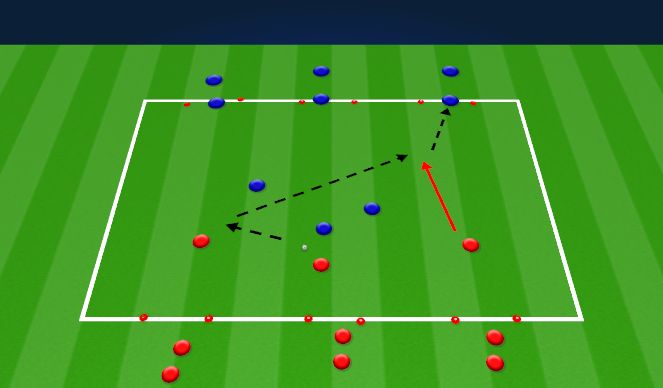
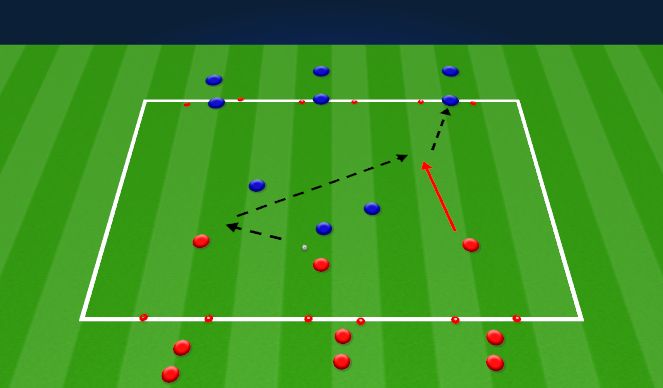
Activation: DO: 2v2 set, force and lock opposition (15 mins)
Defensive Orgainzation: Set, force
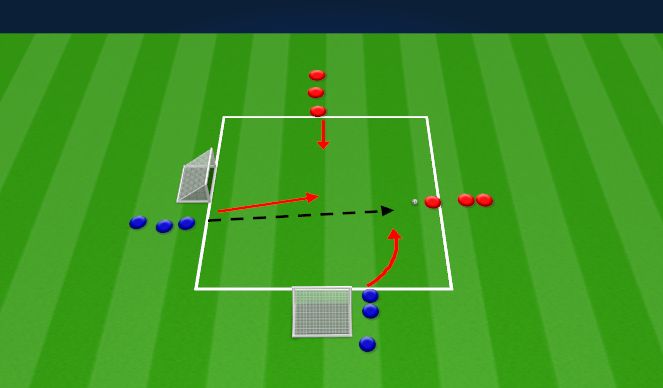
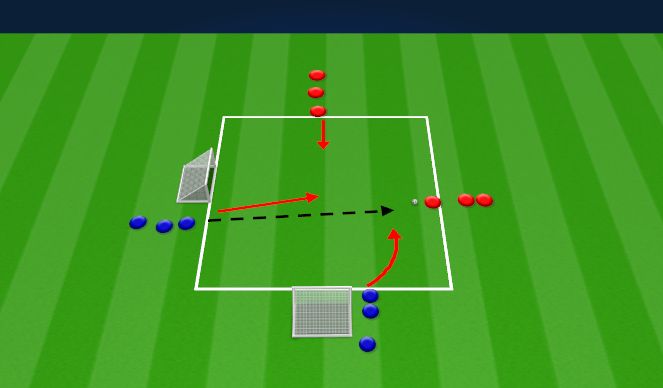
Set up: Use a roughly 15x15 grid or you can use the 18-yard box sideline to the sideline.
Description: A defensive player passes the ball to an attacking player. The two defenders must then work to force the attacking players away from the goals.
Four blocks of two minutes.
Key details:
First defender makes an angled run to force away from a goal
Protect the target area behind them with an angled run
Close down and offer pressure. Can you force them into the far half?
Second defender joins and helps first defender. Aware of the second attacking player, but do not mark tightly.
Defenders are connected and dictate where the opposition can move the ball.
Wait for pressure triggers
Remember body shape
If ball is passed, then second defender switches and becomes first defender and locks away from goal.
See the guidance at the top of this page to understand why you are not seeing interactive Football/Soccer images.
Part: Wave practice: 3v3 to gates (20 mins)
Part: Wave practice: 3v3 to gates
Defensive Organization: Tight lines and triggers
Time: 20 minutes.
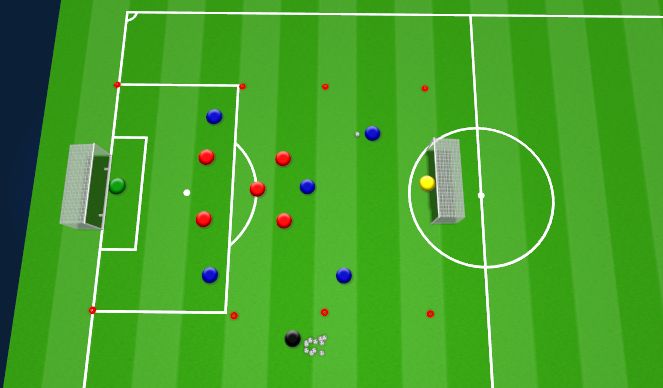
Set up: 15 x 30 yard playing area. Three gates placed on each end line with players in behind. Extra players stand behind.
Description: Teams play 3v3 in the grid with the attacking team looking to pass to of the three gates of the opposition. Defending team is looking to regain possession and transition to play through one of the three opponent’s gates.
When Red passes to a Blue player behind the gate, they get one point. Red stays to defend. The Blues on the pitch immediately leave. The next three Blue players attack. If the Blue team scores, then the Red attacking players leave the pitch and the next three Red attack.
A continuous wave for four minutes.
Keep score.
Coaching questions:
Defensive questions:
How can you work as a unit to deny passes to gates?
Who is the first defender and what is her responsibilities?
What are the responsibilities of the second and third defenders?
Where are the dangerous areas and how can you protect those areas?
Success session will look like:
Defenders will be tight
Defenders will be communicating
Defenders will offer pressure to ball carrier immediately
Second defenders will offer cover to deny through balls
Quick passes
Players communicating verbally and non-verbally
Getting in good supporting positions
See the guidance at the top of this page to understand why you are not seeing interactive Football/Soccer images.
Whole: Murder ball (15 mins)
Whole: Murder ball
Time: 15 minutes
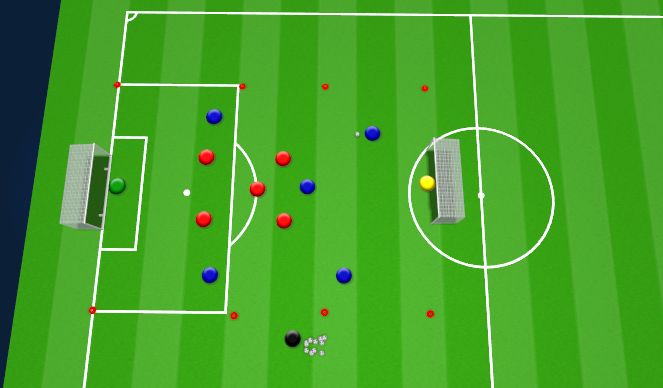
Set up: Depending on numbers and field size available, divide into two or three teams. Either 6v6 with (team of six waiting) and use a slightly smaller field. Or go 9v9 (and no subs) with a larger field.
Description: Coaches have all balls at the side of the pitch. The moment a ball goes out a new ball is played in. It can go to a specific team, the first player who calls for the ball, a player in open space. The ball does not stop.
Before game starts, coach outlines scoring matrix, i.e.:
Dominant foot shot: 1 point
Scoring after a penetrating pass: 2 points
Header: 3 points
Long shot from 15 yards out: 5 points
If on a smaller pitch with a team substituting, games last four minutes or first to five points. The losing team rotates.
If on a larger pitch with no subs, then games last four minutes or five to five points. The losing team must do push-ups/burpees.
After each game, the scoring grid can be changed by the coach or winning team.
The time between each game should not be more than one minute, so teams must move quickly.
Second and third games: Teams secretly select their kill goal. If they score on that type of goal, the game automatically ends and they win. It must be a challenge and approved by the coach.
Key questions:
How can players move to create opportunities to score with a preference on goals worth more points?
What shape allows the attacking team the most opportunities to score? (Probe for width and depth)
How can attacking players create new space? (Probe for making runs in behind defenders)
'%3E%3Cpath id='path4169' d='M 11.4375,70.25 C 11.457031,38.394531 37.277344,13.242188 68.253906,13.050781 99.78125,12.855469 125.73047,38.351563 125.8125,70.078125 125.89844,101.62109 100.43359,127.14063 69.148438,127.42188 37.582031,127.70703 11.464844,102.23438 11.4375,70.25 m 6.425781,-0.08984 c 0.03516,28.421871 23.027344,50.69922 50.519532,50.82031 C 96.433594,121.10156 119.30469,98.367188 119.38281,70.359375 119.45313,42.878906 97.382813,19.714844 69.015625,19.496094 40.75,19.277344 17.964844,42.035156 17.863281,70.160156' style='clip-rule:nonzero;fill:%23333f48;fill-opacity:1;fill-rule:nonzero;stroke:none' /%3E%3Cpath style='fill:%23333f48;fill-opacity:1;fill-rule:nonzero;stroke:none' d='m 39.789063,108.62109 c 0.28125,0.14454 0.550781,0.32032 0.839843,0.4336 2.734375,1.05469 5.554688,1.78125 8.453125,2.23047 2.734375,0.42578 5.484375,0.64453 8.25,0.54297 3.988282,-0.15625 7.832032,-0.94922 11.445313,-2.69532 1.683594,-0.8164 3.246094,-1.82422 4.640625,-3.07422 3.265625,-2.92578 5.171875,-6.582027 5.796875,-10.906246 0.546875,-3.761719 0.04687,-7.425781 -1.09375,-11.019531 -1.4375,-4.523438 -3.730469,-8.582032 -6.703125,-12.265625 -1.03125,-1.277344 -2.082031,-2.535157 -3.113281,-3.808594 C 66.789063,66.1875 65.332031,64.269531 64.0625,62.21875 c -1.601562,-2.582031 -2.835937,-5.316406 -3.613281,-8.261719 -0.683594,-2.574218 -0.902344,-5.1875 -0.6875,-7.828125 0.214844,-2.617187 0.910156,-5.117187 2.152344,-7.441406 2.164062,-4.050781 5.503906,-6.710937 9.816406,-8.179687 1.890625,-0.640625 3.835937,-1.058594 5.832031,-1.195313 1.121094,-0.07813 2.242188,-0.152344 3.363281,-0.164062 4.28125,-0.02734 8.4375,0.734375 12.453125,2.175781 1.871094,0.671875 3.6875,1.496094 5.523438,2.257812 0.226562,0.09375 0.4375,0.230469 0.664062,0.351563 -0.164062,0.25 -0.371093,0.160156 -0.539062,0.164062 -2.824219,0.101563 -5.535156,0.703125 -8.132813,1.804688 -1.335937,0.570312 -2.570312,1.316406 -3.648437,2.296875 -2.527344,2.296875 -3.605469,5.15625 -3.34375,8.550781 0.140625,1.855469 0.722656,3.574219 1.550781,5.222656 0.648438,1.296875 1.414063,2.523438 2.292969,3.675782 0.953125,1.25 1.929687,2.484375 2.929687,3.699218 2.085938,2.523438 4.164063,5.054688 6.050782,7.738282 2.203125,3.136718 4.140627,6.417968 5.589847,9.980468 1.16406,2.867188 2.01562,5.820313 2.39843,8.894532 0.25,2.011718 0.30079,4.03125 0.11719,6.058593 -0.24219,2.640625 -0.79297,5.195313 -1.74609,7.667969 -1.29688,3.36328 -3.300784,6.22656 -5.972659,8.63281 -2.429687,2.19141 -5.171875,3.90625 -8.109375,5.3125 -2.695312,1.29297 -5.464843,2.40235 -8.34375,3.20313 -1.953125,0.54687 -3.945312,0.8789 -5.949218,1.15625 -3.035157,0.41797 -6.085938,0.48828 -9.132813,0.3125 -5.328125,-0.3125 -10.476562,-1.46094 -15.410156,-3.52344 -3.449219,-1.44141 -6.691406,-3.25781 -9.757813,-5.39453 -0.183593,-0.12891 -0.378906,-0.25 -0.53125,-0.41016 -0.07031,-0.0703 -0.05859,-0.22656 -0.08203,-0.34375 z m 0,0' id='path4175' /%3E%3Cpath style='fill:%23333f48;fill-opacity:1;fill-rule:nonzero;stroke:none' d='M 94.699219,29.390625 C 94.089844,29.21875 93.476563,29.054688 92.867188,28.875 90.183594,28.085938 87.46875,27.441406 84.703125,27.046875 c -3.976562,-0.566406 -7.945312,-0.59375 -11.863281,0.402344 -7.535156,1.914062 -12.386719,6.71875 -14.878906,13.996094 -0.894532,2.617187 -1.179688,5.328125 -0.953125,8.078125 0.203125,2.484375 0.867187,4.859375 1.816406,7.160156 0.933594,2.261719 2.117187,4.390625 3.4375,6.449219 1.4375,2.25 3.050781,4.371093 4.640625,6.511718 1.4375,1.933594 2.867187,3.871094 4.261719,5.835938 1.230468,1.730469 2.316406,3.546875 3.273437,5.445312 1.324219,2.625 2.265625,5.378907 2.703125,8.292969 0.433594,2.902344 0.292969,5.765625 -0.660156,8.5625 -0.9375,2.74609 -2.574219,5.00781 -4.777344,6.875 -2.417969,2.04688 -5.203125,3.39844 -8.246094,4.22266 -1.835937,0.5 -3.703125,0.75781 -5.609375,0.82031 -3.886718,0.13281 -7.679687,-0.47266 -11.421875,-1.46094 -2.261718,-0.59765 -4.488281,-1.33203 -6.695312,-2.11328 -0.207031,-0.0742 -0.40625,-0.16797 -0.597656,-0.25 -0.02344,-0.24609 0.148437,-0.19141 0.25,-0.20703 1.96875,-0.30469 3.921875,-0.67969 5.804687,-1.34766 1.367188,-0.48437 2.671875,-1.10156 3.855469,-1.94922 2.25,-1.61328 3.65625,-3.765621 4.0625,-6.515621 0.273437,-1.867188 0.09375,-3.710938 -0.429688,-5.527344 -0.472656,-1.648437 -1.171875,-3.199219 -2.109375,-4.628906 -0.792968,-1.207031 -1.636718,-2.382813 -2.523437,-3.519531 -0.921875,-1.195313 -1.921875,-2.328125 -2.890625,-3.484375 -2.753906,-3.273438 -5.351563,-6.660157 -7.523438,-10.355469 -2.042968,-3.480469 -3.667968,-7.136719 -4.597656,-11.078125 -0.640625,-2.699219 -0.980469,-5.4375 -0.832031,-8.214844 0.238281,-4.53125 1.476562,-8.78125 3.824219,-12.6875 1.082031,-1.800781 2.445312,-3.375 3.988281,-4.800781 2.742187,-2.527344 5.863281,-4.480469 9.257812,-5.992188 3.746094,-1.667968 7.652344,-2.769531 11.707032,-3.394531 3.152343,-0.488281 6.324218,-0.671875 9.507812,-0.519531 8.632813,0.410156 16.671875,2.792969 24,7.433594 0.08203,0.05078 0.152344,0.109375 0.230469,0.167968 -0.0039,0.04297 -0.0078,0.08984 -0.01563,0.136719' id='path4177' /%3E%3Cpath style='fill:%23333f48;fill-opacity:1;fill-rule:nonzero;stroke:none' d='m 31.699219,38.75 c -0.07813,0.238281 -0.152344,0.476563 -0.238281,0.710938 -1.460938,4.074218 -2.066407,8.28125 -1.808594,12.59375 0.4375,7.304687 2.808594,13.925781 7.277344,19.753906 3.714843,4.84375 7.441406,9.671875 11.167968,14.503906 1.113282,1.441406 1.953125,3.007813 2.414063,4.777344 0.332031,1.257812 0.425781,2.539062 0.273437,3.820312 -0.214843,1.832032 -1.070312,3.34375 -2.464843,4.546875 -0.984375,0.851559 -2.113282,1.449219 -3.316407,1.925779 -1.378906,0.54297 -2.8125,0.89063 -4.273437,1.1211 -2.226563,0.35547 -4.46875,0.46093 -6.722656,0.41015 -0.589844,-0.0156 -1.046875,-0.18359 -1.433594,-0.625 -0.636719,-0.72265 -1.335938,-1.39062 -1.9375,-2.14062 C 25.574219,93.800781 22.300781,86.621094 20.84375,78.636719 20.152344,74.835938 19.917969,71 20.15625,67.128906 20.796875,56.773438 24.390625,47.574219 30.859375,39.480469 c 0.21875,-0.273438 0.453125,-0.53125 0.679688,-0.796875 0.05469,0.02344 0.109375,0.04297 0.160156,0.06641' id='path4179' /%3E%3Cpath style='fill:%23333f48;fill-opacity:1;fill-rule:nonzero;stroke:none' d='m 105.41016,101.30078 c -0.13282,-0.3125 0.0234,-0.5039 0.0977,-0.69922 1.38672,-3.749997 1.98047,-7.628904 1.89844,-11.621091 -0.14453,-6.84375 -2.08594,-13.144531 -5.73437,-18.925781 C 99.890625,67.226563 97.917969,64.53125 95.835938,61.917969 94.4375,60.160156 92.988281,58.4375 91.582031,56.6875 90.632813,55.511719 89.6875,54.335938 88.792969,53.121094 c -0.835938,-1.144531 -1.488281,-2.398438 -1.953125,-3.742188 -0.523438,-1.515625 -0.695313,-3.070312 -0.511719,-4.652343 0.21875,-1.839844 1.082031,-3.339844 2.476563,-4.542969 1.039062,-0.890625 2.230468,-1.507813 3.503906,-1.980469 1.632812,-0.609375 3.320312,-0.960937 5.046875,-1.175781 1.917969,-0.238281 3.839841,-0.269531 5.769531,-0.230469 0.52734,0.01172 0.89453,0.203125 1.23828,0.585938 5.50391,6.113281 9.26172,13.144531 11.21875,21.132812 1.11719,4.554688 1.5625,9.179688 1.30469,13.855469 -0.58203,10.625 -4.23438,20.082031 -10.96094,28.339846 -0.15625,0.1914 -0.32812,0.375 -0.51562,0.58984' id='path4181' /%3E%3Cpath style='fill:%23333f48;fill-opacity:1;fill-rule:nonzero;stroke:none' d='m 39.796875,108.63281 c -0.05859,0.0117 -0.117187,0.0234 -0.175781,0.0352 0.05469,-0.0156 0.113281,-0.0312 0.167969,-0.0469 z m 0,0' id='path4183' /%3E%3C/g%3E%3C/svg%3E)
 Play animation
 Play step-by-step
 Repeat (toggle)
 Full Screen
 Pause
Pause Stop
Stop
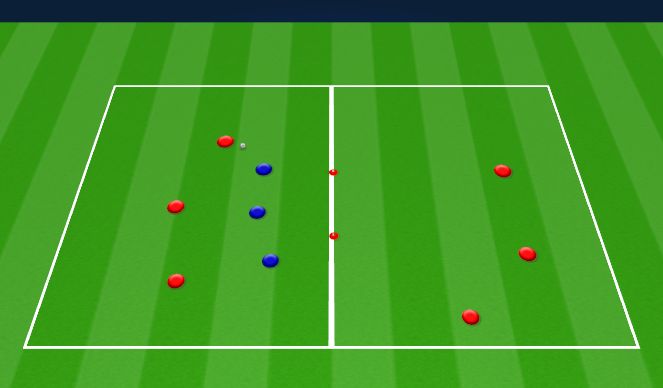
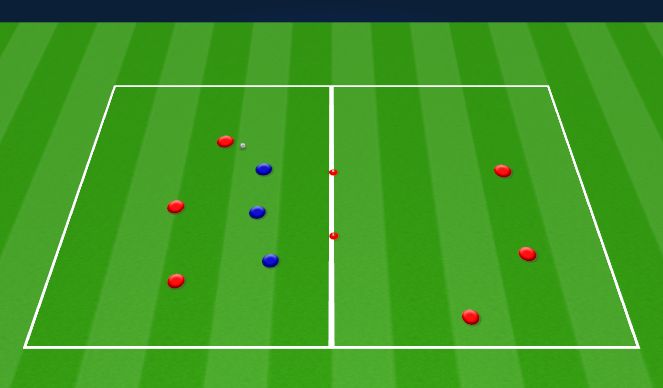
Technical warmup: Rondo in two grids and gate (10 mins)
6v3 rondo in two grids plus gate. Aerobic power session.
Setup: Two rondo grids that are roughly 12x12 or 15x15 each. A gate of cones in the middle. The grid should be large enough that it forces the middle three to be constantly moving, but not so big that they don't have any success.
Description: The work:rest ratio is two minutes work to four minutes rest. The middle three players (Blue) are in for the two minutes. Red scores a point by passing through the middle gate. Blue wins a point by intercepting and dribbling outside the grid.
Coaching points:
Focus on intensity (especially when switching sides)
Focus on closing space quickly
Focus on body shape
Focus on first and second defender roles
How can you organize to make it easier to play through gate? (Use space, pass quickly, minimal touches)