


Football/Soccer Session (Academy Sessions): Creating and Exploiting Overloads (Start Time: 2024-11-04 16:30:00)


FAW Coach Ed
Jun Chan
Profile Summary

| Name: | Jun Chan |
|---|---|
| City: | Pontypridd |
| Country: | United Kingdom |
| Membership: | Adult Member |
| Sport: | Football/Soccer |

Description
Session Title: Creating and Exploiting Overloads
Learning Objectives (Outcomes)
- Specific Practice Outcome: Players will recognize the spare player and execute quick passing sequences to exploit the overload.
- Small-Sided Game Outcome: Players will demonstrate effective movement (interchange positions) and decision-making to commit defenders, thus creating space for overloads.
- Specific Practice into SSG Outcome: Players will apply the principles of quick ball speed, timing of runs, and committing the opponent to create goal-scoring opportunities.
Session Duration (Total: 1 hour)
- Specific Practice: 20 minutes (2 blocks of 9 minutes + 1 minute rest in between)
- Small-Sided Game (SSG): 20 minutes (2 blocks of 9 minutes + 1 minute rest in between)
- Specific Practice into SSG: 20 minutes (2 blocks of 9 minutes + 1 minute rest in between)
Number of Players: 14 players
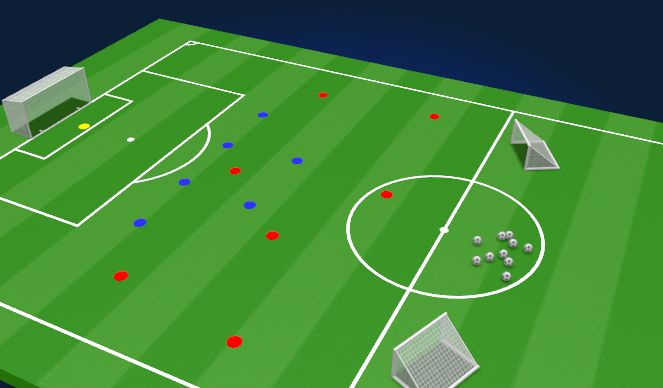
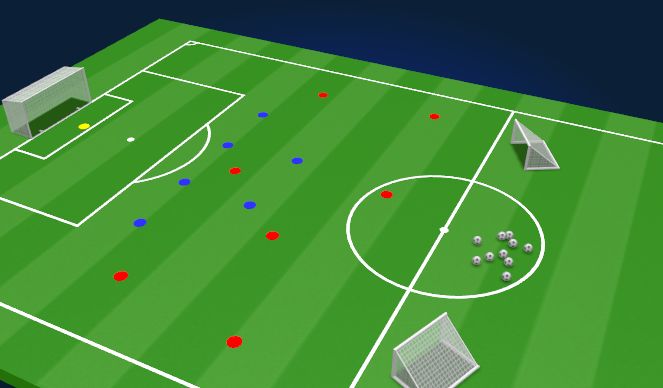
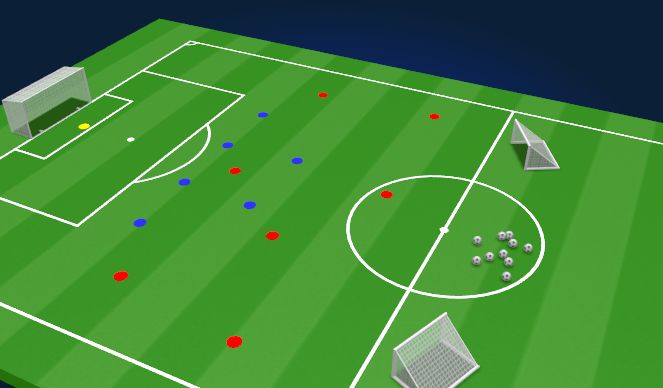
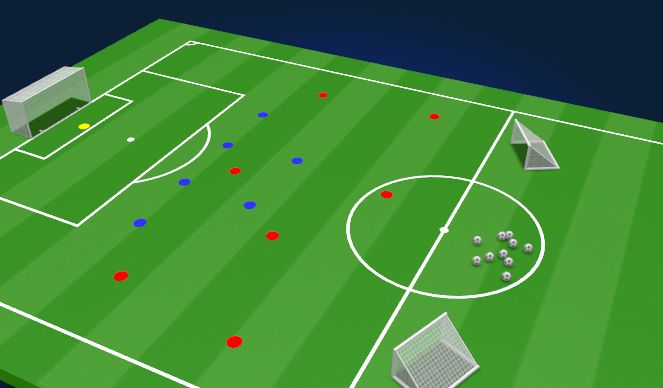
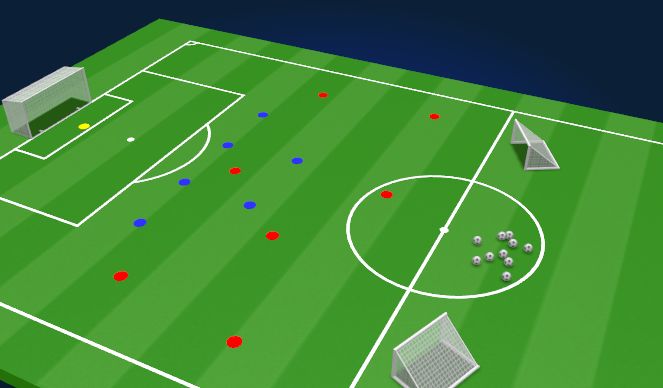
- In Possession Team (7 players): LB, RB, LM, RM, LW, RW, ST
(GK, LCB, RCB, CDM are withdrawn)
Formation: 4-3-3 (adapted due to withdrawn players)
- Out of Possession Team (7 players): GK, LB, LCB, RCB, RB, LCM, RCM
(LST, RST, LW, RW are withdrawn)
Formation: 4-4-2 (adapted due to withdrawn players)
Pitch Area: Half Pitch
- Big Goal for Out of Possession Team (defending team)
- Two Small Mini Goals placed on the halfway line for In Possession Team (attacking team)
See the guidance at the top of this page to understand why you are not seeing interactive Football/Soccer images.
See the guidance at the top of this page to understand why you are not seeing interactive Football/Soccer images.
specific practice
Coaching Interventions
- Freeze: Coach stops play when an obvious 2v1 overload is missed. Highlights correct passing option.
- Walkthrough: Coach walks players through the overlap or underlap movements step-by-step.
- Concurrent: Provides brief reminders (“Find the spare player!”) during open play.
- Bulls-eye: Praises successful execution of overload (e.g., “Excellent underlap pass!”).
Physical Corner
- Work-to-rest ratio: 9 minutes work : 1 minute rest (high-intensity intervals).
- Energy System: Predominantly anaerobic due to repeated high-intensity sprints and quick changes of direction.
Social Corner
- Team Meetings: Brief huddle in each rest interval to discuss successes/challenges.
- Captains: Assign mini-unit captains (e.g., LM or RM) to lead problem-solving.
- Problem-Solving Tasks: Encourage players to suggest the next attacking move or the best time to underlap.
Psychological Corner
- Encourage confidence on the ball (positive mindset).
- Promote decision-making under pressure (focus on scanning and composure).
Progressions
- Restrict touches (e.g., 2-touch max in midfield) to increase ball speed.
- Increase defensive pressure (e.g., out-of-possession team can press higher up).
Regressions
- Allow unlimited touches if players struggle.
- Increase the pitch width slightly to reduce defensive pressure
Feedback Strategies
- During: Immediate, specific feedback (“Great movement to create the overload.”).
- After: Group reflection on how/where overloads were successful, referencing key moments in the practice.
See the guidance at the top of this page to understand why you are not seeing interactive Football/Soccer images.
LSG (20 mins)
Organisation
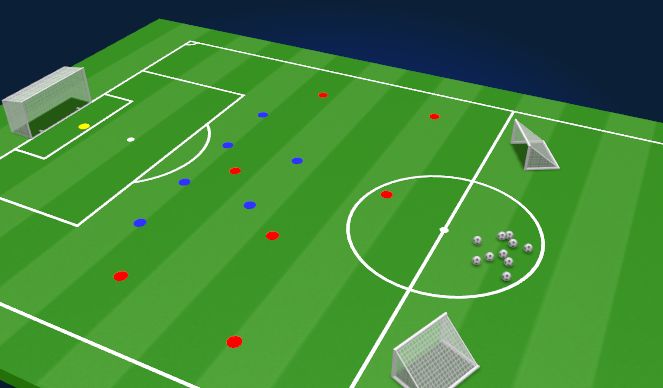
Same half-pitch setup.
Teams: 7v7.
In Possession Team attacks the large goal, Out of Possession Team aims to score in the two mini goals on the halfway line if they regain possession.
Block Structure
Block 1 (9 minutes) → 1 minute rest → Block 2 (9 minutes)
Conditions, Challenges, or Targets (Short Sentences)
- Condition: In-possession team must include at least one overlap before shooting.
- Challenge: Each player to have at least one forward pass or forward run during each possession phase.
- Target: Score within 8 seconds of entering the final third.
Roles & Responsibilities
- In Possession: Continue using wide channels and central overloads.
- Out of Possession: If the ball is won, transition quickly into mini goals.
Technical & Tactical Coaching Points
- Overload Recognition: Identify potential 2v1 or 3v2.
- Spare Player: Constant scanning.
- Ball Speed: Swift circulation to unbalance the defense.
- Positioning: Maintain width and depth to stretch defenders.
Coaching Interventions
- Freeze for missed scoring opportunity due to slow ball circulation.
- Concurrent instruction to remind players about quick transitions.
- Walkthrough if players fail to see the wide overload.
Physical Corner
- High-intensity bursts in SSG fosters anaerobic capacity.
- 9:1 work-to-rest ratio to mimic match demands.
Social Corner
- Continue mini-leadership roles (e.g., the ST organizes attacking press).
- Encourage group problem-solving in short intervals.
Psychological Corner
- Build resilience: encourage players to remain calm when losing possession.
- Positive reinforcement for attempts to create overloads.
Progressions
- Reduce time to score (e.g., 6 seconds) after crossing the halfway line.
- Add a neutral player (floater) to help in-possession if needed.
Regressions
- Remove time constraint if players struggle to build attacks.
- Allow out-of-possession team fewer players pressing the ball.
Feedback Strategies
- During: Reinforce correct application of overload principles.
- After: Collective discussion on successful overloads leading to goals.
See the guidance at the top of this page to understand why you are not seeing interactive Football/Soccer images.
SP into LSG (20 mins)
Organisation
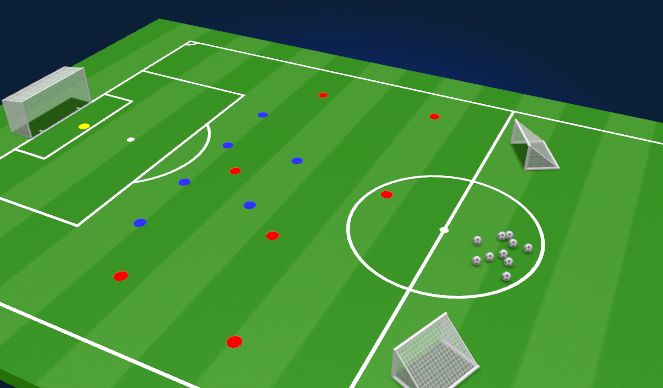
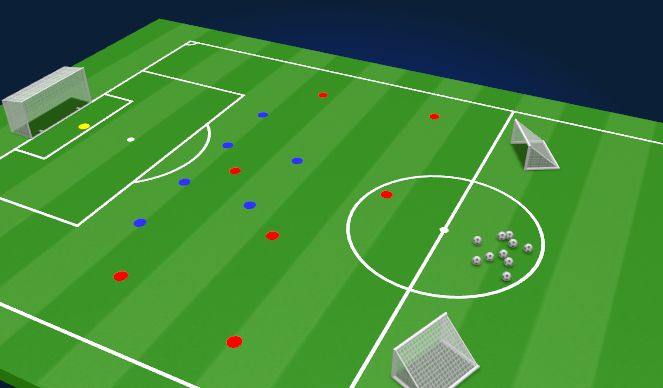
Combine the pattern of play from the Specific Practice with the SSG principles.
Ball always restarts from the centre circle with the in-possession team.
Once a pattern of play (overload move) is executed, teams continue into a live SSG to the big goal or mini goals.
Block Structure
Block 1 (9 minutes) → 1 minute rest → Block 2 (9 minutes)
Conditions, Challenges, or Targets (Short Sentences)
- Condition: Practice must begin with a set overload pattern (e.g., an underlap or overlap) before going live.
- Challenge: Attempt at least two switch-of-play moves in each block.
- Target: Score from an overload situation at least once per block.
Players’ Roles & Responsibilities
- In Possession: Initiate rehearsed patterns (overlap or underlap). Once triggered, free play continues.
- Out of Possession: Defend actively. If ball is won, counter quickly into the mini goals.
Technical & Tactical Coaching Points
- Overload Setup: Quick movement off the ball to create numerical advantage.
- Timing: Execute overlap/underlap at the right moment.
- Combination Play: One-two passes, wall passes to break lines.
- Forward Runs: Penetrate behind defenders once they are committed.
Coaching Interventions
- Freeze: Highlight correct or incorrect timing of overlap.
- Bulls-eye: Immediately praise successful overload leading to goal.
- Walkthrough: If players are confused on positioning after the pattern.
Physical Corner
- Same 9:1 ratio.
- Emphasis on repeated sprint ability (anaerobic power).
Social Corner
- Short team huddles to reinforce responsibilities.
- Encourage vocal communication to organize overload movements.
Psychological Corner
- Support risk-taking in attempting creative passes.
- Maintain confidence and composure when faced with high-pressure defending.
Progressions
- Limit touches or require first-time finishing in the final third.
- Allow the out-of-possession team to press higher from the start.
Regressions
- Provide more space (widen the half-pitch) if too crowded.
- Permit more time on the ball initially to develop confidence.
Feedback Strategies
- During: Immediate praise for correct moves. Corrections for poor timing.
- After: Team debrief on how effectively the pattern of play transitions into open LSG situations.
'%3E%3Cpath id='path4169' d='M 11.4375,70.25 C 11.457031,38.394531 37.277344,13.242188 68.253906,13.050781 99.78125,12.855469 125.73047,38.351563 125.8125,70.078125 125.89844,101.62109 100.43359,127.14063 69.148438,127.42188 37.582031,127.70703 11.464844,102.23438 11.4375,70.25 m 6.425781,-0.08984 c 0.03516,28.421871 23.027344,50.69922 50.519532,50.82031 C 96.433594,121.10156 119.30469,98.367188 119.38281,70.359375 119.45313,42.878906 97.382813,19.714844 69.015625,19.496094 40.75,19.277344 17.964844,42.035156 17.863281,70.160156' style='clip-rule:nonzero;fill:%23333f48;fill-opacity:1;fill-rule:nonzero;stroke:none' /%3E%3Cpath style='fill:%23333f48;fill-opacity:1;fill-rule:nonzero;stroke:none' d='m 39.789063,108.62109 c 0.28125,0.14454 0.550781,0.32032 0.839843,0.4336 2.734375,1.05469 5.554688,1.78125 8.453125,2.23047 2.734375,0.42578 5.484375,0.64453 8.25,0.54297 3.988282,-0.15625 7.832032,-0.94922 11.445313,-2.69532 1.683594,-0.8164 3.246094,-1.82422 4.640625,-3.07422 3.265625,-2.92578 5.171875,-6.582027 5.796875,-10.906246 0.546875,-3.761719 0.04687,-7.425781 -1.09375,-11.019531 -1.4375,-4.523438 -3.730469,-8.582032 -6.703125,-12.265625 -1.03125,-1.277344 -2.082031,-2.535157 -3.113281,-3.808594 C 66.789063,66.1875 65.332031,64.269531 64.0625,62.21875 c -1.601562,-2.582031 -2.835937,-5.316406 -3.613281,-8.261719 -0.683594,-2.574218 -0.902344,-5.1875 -0.6875,-7.828125 0.214844,-2.617187 0.910156,-5.117187 2.152344,-7.441406 2.164062,-4.050781 5.503906,-6.710937 9.816406,-8.179687 1.890625,-0.640625 3.835937,-1.058594 5.832031,-1.195313 1.121094,-0.07813 2.242188,-0.152344 3.363281,-0.164062 4.28125,-0.02734 8.4375,0.734375 12.453125,2.175781 1.871094,0.671875 3.6875,1.496094 5.523438,2.257812 0.226562,0.09375 0.4375,0.230469 0.664062,0.351563 -0.164062,0.25 -0.371093,0.160156 -0.539062,0.164062 -2.824219,0.101563 -5.535156,0.703125 -8.132813,1.804688 -1.335937,0.570312 -2.570312,1.316406 -3.648437,2.296875 -2.527344,2.296875 -3.605469,5.15625 -3.34375,8.550781 0.140625,1.855469 0.722656,3.574219 1.550781,5.222656 0.648438,1.296875 1.414063,2.523438 2.292969,3.675782 0.953125,1.25 1.929687,2.484375 2.929687,3.699218 2.085938,2.523438 4.164063,5.054688 6.050782,7.738282 2.203125,3.136718 4.140627,6.417968 5.589847,9.980468 1.16406,2.867188 2.01562,5.820313 2.39843,8.894532 0.25,2.011718 0.30079,4.03125 0.11719,6.058593 -0.24219,2.640625 -0.79297,5.195313 -1.74609,7.667969 -1.29688,3.36328 -3.300784,6.22656 -5.972659,8.63281 -2.429687,2.19141 -5.171875,3.90625 -8.109375,5.3125 -2.695312,1.29297 -5.464843,2.40235 -8.34375,3.20313 -1.953125,0.54687 -3.945312,0.8789 -5.949218,1.15625 -3.035157,0.41797 -6.085938,0.48828 -9.132813,0.3125 -5.328125,-0.3125 -10.476562,-1.46094 -15.410156,-3.52344 -3.449219,-1.44141 -6.691406,-3.25781 -9.757813,-5.39453 -0.183593,-0.12891 -0.378906,-0.25 -0.53125,-0.41016 -0.07031,-0.0703 -0.05859,-0.22656 -0.08203,-0.34375 z m 0,0' id='path4175' /%3E%3Cpath style='fill:%23333f48;fill-opacity:1;fill-rule:nonzero;stroke:none' d='M 94.699219,29.390625 C 94.089844,29.21875 93.476563,29.054688 92.867188,28.875 90.183594,28.085938 87.46875,27.441406 84.703125,27.046875 c -3.976562,-0.566406 -7.945312,-0.59375 -11.863281,0.402344 -7.535156,1.914062 -12.386719,6.71875 -14.878906,13.996094 -0.894532,2.617187 -1.179688,5.328125 -0.953125,8.078125 0.203125,2.484375 0.867187,4.859375 1.816406,7.160156 0.933594,2.261719 2.117187,4.390625 3.4375,6.449219 1.4375,2.25 3.050781,4.371093 4.640625,6.511718 1.4375,1.933594 2.867187,3.871094 4.261719,5.835938 1.230468,1.730469 2.316406,3.546875 3.273437,5.445312 1.324219,2.625 2.265625,5.378907 2.703125,8.292969 0.433594,2.902344 0.292969,5.765625 -0.660156,8.5625 -0.9375,2.74609 -2.574219,5.00781 -4.777344,6.875 -2.417969,2.04688 -5.203125,3.39844 -8.246094,4.22266 -1.835937,0.5 -3.703125,0.75781 -5.609375,0.82031 -3.886718,0.13281 -7.679687,-0.47266 -11.421875,-1.46094 -2.261718,-0.59765 -4.488281,-1.33203 -6.695312,-2.11328 -0.207031,-0.0742 -0.40625,-0.16797 -0.597656,-0.25 -0.02344,-0.24609 0.148437,-0.19141 0.25,-0.20703 1.96875,-0.30469 3.921875,-0.67969 5.804687,-1.34766 1.367188,-0.48437 2.671875,-1.10156 3.855469,-1.94922 2.25,-1.61328 3.65625,-3.765621 4.0625,-6.515621 0.273437,-1.867188 0.09375,-3.710938 -0.429688,-5.527344 -0.472656,-1.648437 -1.171875,-3.199219 -2.109375,-4.628906 -0.792968,-1.207031 -1.636718,-2.382813 -2.523437,-3.519531 -0.921875,-1.195313 -1.921875,-2.328125 -2.890625,-3.484375 -2.753906,-3.273438 -5.351563,-6.660157 -7.523438,-10.355469 -2.042968,-3.480469 -3.667968,-7.136719 -4.597656,-11.078125 -0.640625,-2.699219 -0.980469,-5.4375 -0.832031,-8.214844 0.238281,-4.53125 1.476562,-8.78125 3.824219,-12.6875 1.082031,-1.800781 2.445312,-3.375 3.988281,-4.800781 2.742187,-2.527344 5.863281,-4.480469 9.257812,-5.992188 3.746094,-1.667968 7.652344,-2.769531 11.707032,-3.394531 3.152343,-0.488281 6.324218,-0.671875 9.507812,-0.519531 8.632813,0.410156 16.671875,2.792969 24,7.433594 0.08203,0.05078 0.152344,0.109375 0.230469,0.167968 -0.0039,0.04297 -0.0078,0.08984 -0.01563,0.136719' id='path4177' /%3E%3Cpath style='fill:%23333f48;fill-opacity:1;fill-rule:nonzero;stroke:none' d='m 31.699219,38.75 c -0.07813,0.238281 -0.152344,0.476563 -0.238281,0.710938 -1.460938,4.074218 -2.066407,8.28125 -1.808594,12.59375 0.4375,7.304687 2.808594,13.925781 7.277344,19.753906 3.714843,4.84375 7.441406,9.671875 11.167968,14.503906 1.113282,1.441406 1.953125,3.007813 2.414063,4.777344 0.332031,1.257812 0.425781,2.539062 0.273437,3.820312 -0.214843,1.832032 -1.070312,3.34375 -2.464843,4.546875 -0.984375,0.851559 -2.113282,1.449219 -3.316407,1.925779 -1.378906,0.54297 -2.8125,0.89063 -4.273437,1.1211 -2.226563,0.35547 -4.46875,0.46093 -6.722656,0.41015 -0.589844,-0.0156 -1.046875,-0.18359 -1.433594,-0.625 -0.636719,-0.72265 -1.335938,-1.39062 -1.9375,-2.14062 C 25.574219,93.800781 22.300781,86.621094 20.84375,78.636719 20.152344,74.835938 19.917969,71 20.15625,67.128906 20.796875,56.773438 24.390625,47.574219 30.859375,39.480469 c 0.21875,-0.273438 0.453125,-0.53125 0.679688,-0.796875 0.05469,0.02344 0.109375,0.04297 0.160156,0.06641' id='path4179' /%3E%3Cpath style='fill:%23333f48;fill-opacity:1;fill-rule:nonzero;stroke:none' d='m 105.41016,101.30078 c -0.13282,-0.3125 0.0234,-0.5039 0.0977,-0.69922 1.38672,-3.749997 1.98047,-7.628904 1.89844,-11.621091 -0.14453,-6.84375 -2.08594,-13.144531 -5.73437,-18.925781 C 99.890625,67.226563 97.917969,64.53125 95.835938,61.917969 94.4375,60.160156 92.988281,58.4375 91.582031,56.6875 90.632813,55.511719 89.6875,54.335938 88.792969,53.121094 c -0.835938,-1.144531 -1.488281,-2.398438 -1.953125,-3.742188 -0.523438,-1.515625 -0.695313,-3.070312 -0.511719,-4.652343 0.21875,-1.839844 1.082031,-3.339844 2.476563,-4.542969 1.039062,-0.890625 2.230468,-1.507813 3.503906,-1.980469 1.632812,-0.609375 3.320312,-0.960937 5.046875,-1.175781 1.917969,-0.238281 3.839841,-0.269531 5.769531,-0.230469 0.52734,0.01172 0.89453,0.203125 1.23828,0.585938 5.50391,6.113281 9.26172,13.144531 11.21875,21.132812 1.11719,4.554688 1.5625,9.179688 1.30469,13.855469 -0.58203,10.625 -4.23438,20.082031 -10.96094,28.339846 -0.15625,0.1914 -0.32812,0.375 -0.51562,0.58984' id='path4181' /%3E%3Cpath style='fill:%23333f48;fill-opacity:1;fill-rule:nonzero;stroke:none' d='m 39.796875,108.63281 c -0.05859,0.0117 -0.117187,0.0234 -0.175781,0.0352 0.05469,-0.0156 0.113281,-0.0312 0.167969,-0.0469 z m 0,0' id='path4183' /%3E%3C/g%3E%3C/svg%3E)
 Play animation
 Play step-by-step
 Repeat (toggle)
 Full Screen
 Pause
Pause Stop
Stop
specific practice (20 mins)
Practice Explanation
Challenges, Conditions, or Targets (Short Sentences)
Player Roles & Responsibilities (Examples)
In Possession LB: Stays wide and slightly advanced from halfway line. Looks to receive and combine with LW.
In Possession RB: Mirrors LB but on the right side. Looks to overlap or underlap around RW.
In Possession LM & RM: Move in pockets between opposition midfield and defensive lines to offer passing options.
In Possession LW & RW: Stay high and wide initially. Make diagonal runs inside to create overload with ST.
In Possession ST: Drops into midfield at times to create a numerical advantage; looks to combine with LM/RM.
Out of Possession GK: Organizes defenders and covers space behind defensive line.
Out of Possession LB & RB: Press wide areas when ball moves to corresponding winger.
Out of Possession LCB & RCB: Stay compact, protect central areas. Track ST runs.
Out of Possession LCM & RCM: Apply pressure in central midfield. Deny through passes.
Two Key Strategies for Creative Attack (In Possession)
Overlap Overload Strategy
RB overlaps RW once the ball moves wide on the right.
RW drags the opposition LB inside, freeing space for RB.
RM steps higher to support and become the spare player.
LB tucks slightly central to be the pivot pass option if play is switched.
Underlap / Inside Channel Strategy
LM drives inside with the ball from left midfield.
LW stays wide, pinning the out-of-possession RB.
ST shifts to the near post area, dragging defenders away.
RM or LB arrives in the inside channel to receive a reverse pass from LM.
Quick combination through central channel to exploit the 2v1 or 3v2 scenario.
Technical & Tactical Coaching Points