


Football/Soccer Session (Academy Sessions): Set pieces


Dandenong City FC
Elyas Baeini
Profile Summary

| Name: | Elyas Baeini |
|---|---|
| City: | Blackburn North |
| Country: | Australia |
| Membership: | Adult Member |
| Sport: | Football/Soccer |

See the guidance at the top of this page to understand why you are not seeing interactive Football/Soccer images.
See the guidance at the top of this page to understand why you are not seeing interactive Football/Soccer images.
 Save Image:
Animation 2 (20 mins)
Session Objective:
To develop midfield coordination, quick combination play, and the ability to break defensive lines through central penetration.
Practice Overview:
The sequence begins with the ball being circulated laterally across the pitch to shift the defensive structure and create openings centrally. The ball is then played into the No. 8 (box-to-box midfielder), who receives between the lines. Upon receiving, the No. 8 plays a quick bounce pass back to the No. 6 (deep-lying playmaker), who has positioned themselves to receive facing forward. The No. 6 then delivers a penetrating pass through or between the defenders to a forward or wide runner making a timed run in behind the defensive line.
Key Coaching Points:
Positioning & Body Shape:
The No. 8 should receive in a pocket of space with a body shape that allows for a clean bounce pass. The No. 6 must anticipate the return and position accordingly to play forward quickly.Timing & Tempo:
Emphasize the speed and rhythm of the combination. The bounce pass from the No. 8 must be sharp and well-weighted, enabling the No. 6 to play the next ball in stride and without hesitation.Scanning & Decision-Making:
The No. 6 must scan before receiving the return pass to identify options for the through ball. Encourage early recognition of forward runs and gaps in the defensive line.Movement Off the Ball:
Forwards and wide players should coordinate their movement to stretch the back line and create channels for the final pass. Encourage diagonal or curved runs to stay onside and attack space effectively.Communication:
Verbal and non-verbal cues (e.g., pointing, eye contact) should be encouraged throughout to ensure smooth execution and coordination.
Progressions:
Add Passive Defenders: Introduce a defensive midfield line and back four to create realistic spacing and pressure.
Live Opposition: Add pressure to the No. 8 and No. 6 to challenge decision-making and tempo.
End Product: Finish the sequence with a goal-scoring opportunity to reinforce match realism.
Session Outcomes:
By the end of the session, players should demonstrate improved understanding of central combinations, enhanced awareness of timing in midfield rotations, and increased ability to execute through balls under pressure.
See the guidance at the top of this page to understand why you are not seeing interactive Football/Soccer images.
Screen 3 (15 mins)
Exercise Focus:
1v1 Scenarios in Wide Areas with Finishing Options
Activity Description:
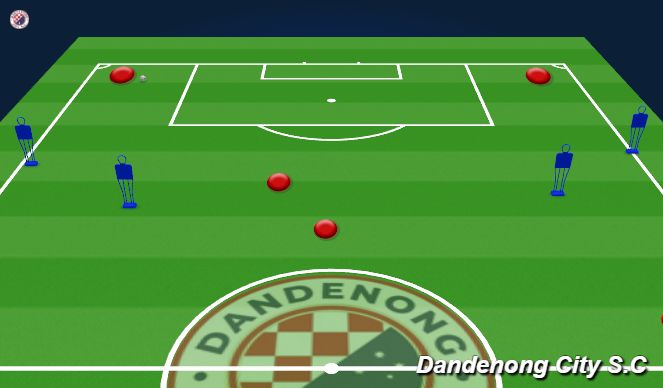
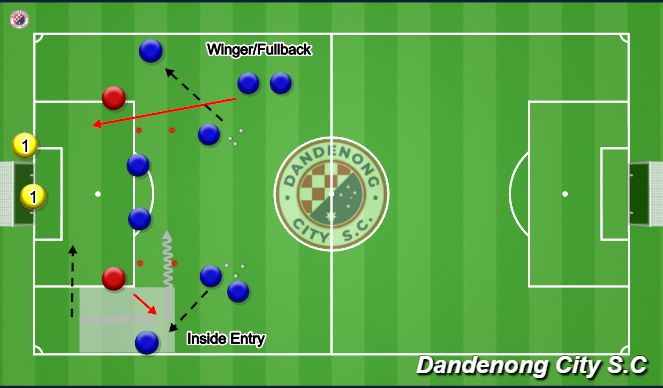
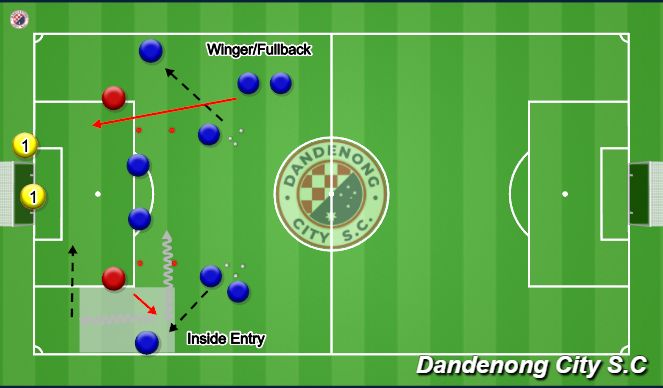
The Light Blue Central Midfielder (CM) initiates the play by passing into the #11 (left winger).
The #11 engages the wide defender in a 1v1 duel, with two key attacking options:
Option 1: Drive inside through the red gate to create a central attacking opportunity.
Option 2: Drive down the line and either:
Shoot into the mini goal
Deliver a cross to an oncoming striker making a run into the box
Goalkeepers can be included to increase realism and decision-making under pressure.
Progression:
Introduce a full-back to support the attack by either:
Overlapping around the winger
Underlapping into the half-space to receive or create a decoy run
Offside rule is now active to increase tactical awareness and movement timing.
Coaching Points:
Movement & Timing:
Ensure runs are well-timed in relation to the ball carrier's action and the defender's positioning.
Create effective vertical separation between the winger and full-back to stretch the defensive line and increase passing options.
Technical Execution:
Weight of pass must allow the receiver to play forward with minimal delay.
Encourage use of disguise or deception in passing and dribbling to unbalance the defender.
Decision-Making:
Recognize the defender’s body position and choose the correct attacking option (cut inside vs. go wide).
Identify when to combine with the full-back or take on the defender directly
See the guidance at the top of this page to understand why you are not seeing interactive Football/Soccer images.
Screen 4 (25 mins)
Training Theme:
Building Through the Middle Third to Create Attacks from Wide Areas
Session Objective:
Develop effective build-up play through the middle third and create high-quality attacking opportunities by exploiting wide areas.
Team Roles & Objectives:
Red Team (Attacking Focus):
Build up play starting from the goalkeeper.
Progress through the midfield and create chances from wide areas.
Aim to score by entering the penalty area from wide zones or through central progression.
Navy Blue Team (Defensive / Transition Focus):
Regain possession and counter-attack quickly.
Score by finishing into mini goals or by playing a long pass directly into the goalkeeper’s hands.
Game Rules:
Starting Play:
All restarts begin with the Red Team in possession from their goalkeeper.
Attacking Principles (Red Team):
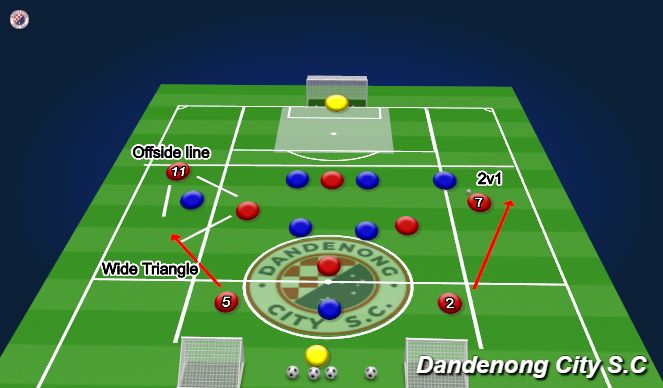
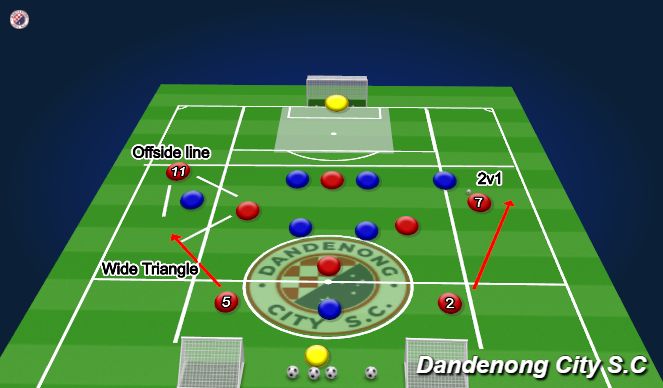
Wide-area attacks begin unopposed.
The wide attacker may take one touch and deliver a cross or:
Combine with an overlapping or underlapping full-back
Link up with a supporting midfielder to form a wide triangle combination
Defensive Constraints (Navy Blue):
Blue defenders cannot enter the finishing zone.
Must maintain their #9 (central forward) in a high position throughout.
Progression:
One defender is permitted to enter the wide zone to apply pressure.
The defending team may choose the number of players to commit into wide areas strategically.
Scoring System:
Red Team:
Goal from a wide-area entry with a first-time finish in the box = 3 points
Goal from central progression or long-range shot = 1 point
Navy Blue Team:
Goal in mini goals or successful long pass directly to goalkeeper = 1 point
Coaching Points & Player Tasks
Build-Up Phase:
Encourage players to take a purposeful first touch to eliminate the nearest pressing opponent.
Promote combinations that engage and eliminate a defender, creating 2v1 scenarios around the ball.
Look to find the wingers (#7/#11) early with incisive, cutting passes that break lines.
Wide Area Actions:
Focus on creating numerical superiority in wide areas (2v1 or triangular combinations).
Encourage overlapping and underlapping runs to disrupt defensive lines.
Seek to combine effectively to penetrate into the end zone and deliver a cross or final pass.
Attacking in the Box:
Upon recognition of a successful wide combination, attackers must adjust speed and direction quickly to exploit space.
Players should vary their movements in response to defenders scanning and adjusting, aiming to "change the picture" with sharp, unpredictable runs.
Encourage dynamic and timed movement to meet crosses or cut-backs with intent and precision.
See the guidance at the top of this page to understand why you are not seeing interactive Football/Soccer images.
Save Image:
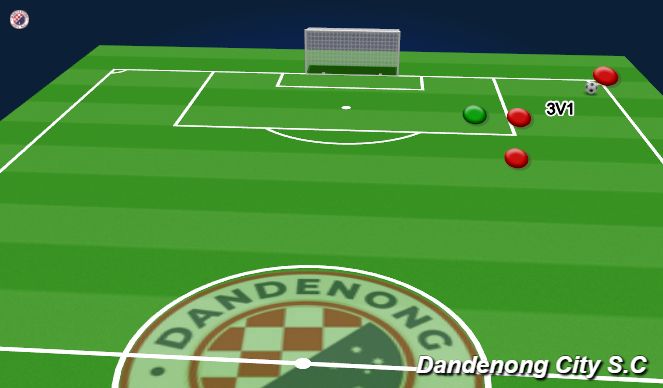
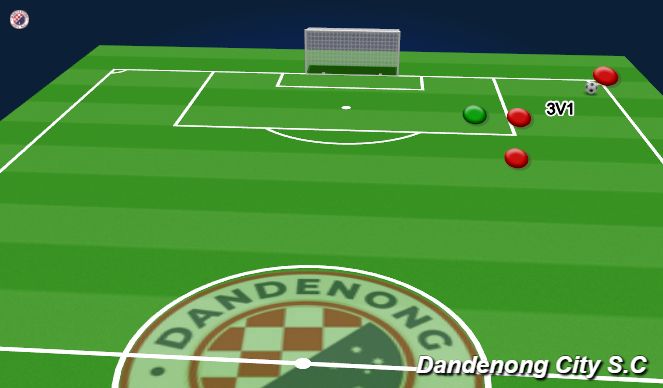
SET PIECE
Objective:
To create a numerical advantage from a short corner routine, pulling a defender out of position and generating space for a quality delivery or combination play.
Structure & Execution:
Two attacking players are positioned at the edge of the penalty area.
As the corner is taken short, one of these players drops toward the ball to receive the pass, drawing the nearest defender (marked in green) out of the defensive line.
Upon receiving, the dropping player plays a simple return pass to the corner taker and immediately continues their movement by running around the outside.
This dynamic movement creates a 3v1 overload on the flank, combining the corner taker, the original receiver, and the supporting player who remained higher at the edge of the box.
Coaching Points:
Timing of Movement: The player dropping must time their movement to receive unopposed and immediately recycle the ball.
Crisp, Accurate Passing: Ensure the initial short pass and return ball are sharp to maintain tempo and catch defenders off balance.
Support Shape: The third player (edge of box) holds position to provide balance and an option for either a cut-back or quick combination.
Decision-Making in 3v1: Once the overload is created, players must recognize whether to deliver an early cross, combine further, or cut inside.
Tactical Purpose:
This routine aims to disrupt zonal or man-marking setups by forcing defenders out of shape, isolating a single defender against three attackers. It also delays the defensive unit’s ability to recover and reorganize, increasing the chances of creating a high-quality chance from a wide area.
See the guidance at the top of this page to understand why you are not seeing interactive Football/Soccer images.
Save Image:
Animation 6
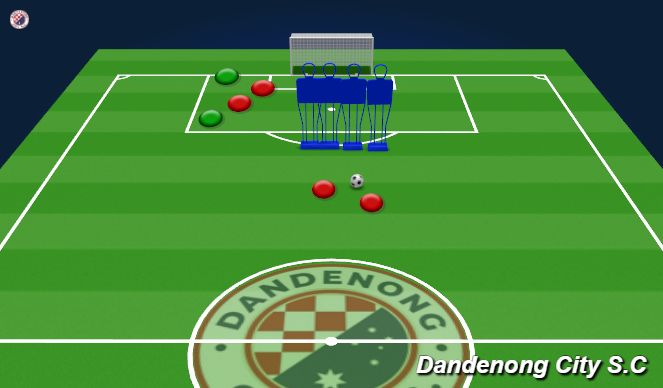
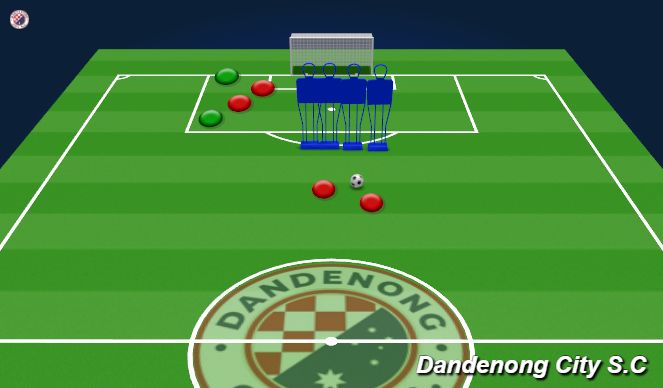
Free-Kick Set Piece – Deception and Back-Post Overload
Objective:
This free-kick routine is designed to deceive the opposition by creating the illusion that the second player will take the direct shot, while executing a disguised pass to create a better shooting angle and timing.
Set-Up:
The ball is positioned centrally or slightly wide outside the box.
Player 1 stands over the ball as the initial taker.
Player 2 is positioned nearby, giving the impression they will take the free kick directly.
Execution:
Player 1 steps up and rolls the ball slightly forward into the path of Player 2, simulating a touch that sets up a live ball.
Player 2 strikes the ball first-time or with minimal touches, aiming for goal.
All remaining attacking players make timed runs to the back post, anticipating rebounds, deflections, or to create overloads and distractions for defenders.
Key Principles:
Deception: The initial set-up should sell the idea that Player 2 will take the free kick directly, drawing the defenders and goalkeeper into early commitment.
Timing: The movement of the players toward the back post must be coordinated to ensure they arrive in sync with the strike.
Execution Quality: The pass from Player 1 must be clean and well-weighted to set up Player 2 for an optimal shot.
Back-Post Presence: Overloading the back post increases the chances of capitalizing on second balls, rebounds, or confusion in the defensive line.
Coaching Points:
Ensure clarity in roles and rehearsal of timing to avoid mistimed runs or miscommunication.
Emphasize the importance of disguise and body language in the set-up.
Rehearse multiple variations to adapt to defensive setups (e.g., dummy runners, late arrivals).
Reinforce the need for aggression and anticipation at the back post to capitalize o
'%3E%3Cpath id='path4169' d='M 11.4375,70.25 C 11.457031,38.394531 37.277344,13.242188 68.253906,13.050781 99.78125,12.855469 125.73047,38.351563 125.8125,70.078125 125.89844,101.62109 100.43359,127.14063 69.148438,127.42188 37.582031,127.70703 11.464844,102.23438 11.4375,70.25 m 6.425781,-0.08984 c 0.03516,28.421871 23.027344,50.69922 50.519532,50.82031 C 96.433594,121.10156 119.30469,98.367188 119.38281,70.359375 119.45313,42.878906 97.382813,19.714844 69.015625,19.496094 40.75,19.277344 17.964844,42.035156 17.863281,70.160156' style='clip-rule:nonzero;fill:%23333f48;fill-opacity:1;fill-rule:nonzero;stroke:none' /%3E%3Cpath style='fill:%23333f48;fill-opacity:1;fill-rule:nonzero;stroke:none' d='m 39.789063,108.62109 c 0.28125,0.14454 0.550781,0.32032 0.839843,0.4336 2.734375,1.05469 5.554688,1.78125 8.453125,2.23047 2.734375,0.42578 5.484375,0.64453 8.25,0.54297 3.988282,-0.15625 7.832032,-0.94922 11.445313,-2.69532 1.683594,-0.8164 3.246094,-1.82422 4.640625,-3.07422 3.265625,-2.92578 5.171875,-6.582027 5.796875,-10.906246 0.546875,-3.761719 0.04687,-7.425781 -1.09375,-11.019531 -1.4375,-4.523438 -3.730469,-8.582032 -6.703125,-12.265625 -1.03125,-1.277344 -2.082031,-2.535157 -3.113281,-3.808594 C 66.789063,66.1875 65.332031,64.269531 64.0625,62.21875 c -1.601562,-2.582031 -2.835937,-5.316406 -3.613281,-8.261719 -0.683594,-2.574218 -0.902344,-5.1875 -0.6875,-7.828125 0.214844,-2.617187 0.910156,-5.117187 2.152344,-7.441406 2.164062,-4.050781 5.503906,-6.710937 9.816406,-8.179687 1.890625,-0.640625 3.835937,-1.058594 5.832031,-1.195313 1.121094,-0.07813 2.242188,-0.152344 3.363281,-0.164062 4.28125,-0.02734 8.4375,0.734375 12.453125,2.175781 1.871094,0.671875 3.6875,1.496094 5.523438,2.257812 0.226562,0.09375 0.4375,0.230469 0.664062,0.351563 -0.164062,0.25 -0.371093,0.160156 -0.539062,0.164062 -2.824219,0.101563 -5.535156,0.703125 -8.132813,1.804688 -1.335937,0.570312 -2.570312,1.316406 -3.648437,2.296875 -2.527344,2.296875 -3.605469,5.15625 -3.34375,8.550781 0.140625,1.855469 0.722656,3.574219 1.550781,5.222656 0.648438,1.296875 1.414063,2.523438 2.292969,3.675782 0.953125,1.25 1.929687,2.484375 2.929687,3.699218 2.085938,2.523438 4.164063,5.054688 6.050782,7.738282 2.203125,3.136718 4.140627,6.417968 5.589847,9.980468 1.16406,2.867188 2.01562,5.820313 2.39843,8.894532 0.25,2.011718 0.30079,4.03125 0.11719,6.058593 -0.24219,2.640625 -0.79297,5.195313 -1.74609,7.667969 -1.29688,3.36328 -3.300784,6.22656 -5.972659,8.63281 -2.429687,2.19141 -5.171875,3.90625 -8.109375,5.3125 -2.695312,1.29297 -5.464843,2.40235 -8.34375,3.20313 -1.953125,0.54687 -3.945312,0.8789 -5.949218,1.15625 -3.035157,0.41797 -6.085938,0.48828 -9.132813,0.3125 -5.328125,-0.3125 -10.476562,-1.46094 -15.410156,-3.52344 -3.449219,-1.44141 -6.691406,-3.25781 -9.757813,-5.39453 -0.183593,-0.12891 -0.378906,-0.25 -0.53125,-0.41016 -0.07031,-0.0703 -0.05859,-0.22656 -0.08203,-0.34375 z m 0,0' id='path4175' /%3E%3Cpath style='fill:%23333f48;fill-opacity:1;fill-rule:nonzero;stroke:none' d='M 94.699219,29.390625 C 94.089844,29.21875 93.476563,29.054688 92.867188,28.875 90.183594,28.085938 87.46875,27.441406 84.703125,27.046875 c -3.976562,-0.566406 -7.945312,-0.59375 -11.863281,0.402344 -7.535156,1.914062 -12.386719,6.71875 -14.878906,13.996094 -0.894532,2.617187 -1.179688,5.328125 -0.953125,8.078125 0.203125,2.484375 0.867187,4.859375 1.816406,7.160156 0.933594,2.261719 2.117187,4.390625 3.4375,6.449219 1.4375,2.25 3.050781,4.371093 4.640625,6.511718 1.4375,1.933594 2.867187,3.871094 4.261719,5.835938 1.230468,1.730469 2.316406,3.546875 3.273437,5.445312 1.324219,2.625 2.265625,5.378907 2.703125,8.292969 0.433594,2.902344 0.292969,5.765625 -0.660156,8.5625 -0.9375,2.74609 -2.574219,5.00781 -4.777344,6.875 -2.417969,2.04688 -5.203125,3.39844 -8.246094,4.22266 -1.835937,0.5 -3.703125,0.75781 -5.609375,0.82031 -3.886718,0.13281 -7.679687,-0.47266 -11.421875,-1.46094 -2.261718,-0.59765 -4.488281,-1.33203 -6.695312,-2.11328 -0.207031,-0.0742 -0.40625,-0.16797 -0.597656,-0.25 -0.02344,-0.24609 0.148437,-0.19141 0.25,-0.20703 1.96875,-0.30469 3.921875,-0.67969 5.804687,-1.34766 1.367188,-0.48437 2.671875,-1.10156 3.855469,-1.94922 2.25,-1.61328 3.65625,-3.765621 4.0625,-6.515621 0.273437,-1.867188 0.09375,-3.710938 -0.429688,-5.527344 -0.472656,-1.648437 -1.171875,-3.199219 -2.109375,-4.628906 -0.792968,-1.207031 -1.636718,-2.382813 -2.523437,-3.519531 -0.921875,-1.195313 -1.921875,-2.328125 -2.890625,-3.484375 -2.753906,-3.273438 -5.351563,-6.660157 -7.523438,-10.355469 -2.042968,-3.480469 -3.667968,-7.136719 -4.597656,-11.078125 -0.640625,-2.699219 -0.980469,-5.4375 -0.832031,-8.214844 0.238281,-4.53125 1.476562,-8.78125 3.824219,-12.6875 1.082031,-1.800781 2.445312,-3.375 3.988281,-4.800781 2.742187,-2.527344 5.863281,-4.480469 9.257812,-5.992188 3.746094,-1.667968 7.652344,-2.769531 11.707032,-3.394531 3.152343,-0.488281 6.324218,-0.671875 9.507812,-0.519531 8.632813,0.410156 16.671875,2.792969 24,7.433594 0.08203,0.05078 0.152344,0.109375 0.230469,0.167968 -0.0039,0.04297 -0.0078,0.08984 -0.01563,0.136719' id='path4177' /%3E%3Cpath style='fill:%23333f48;fill-opacity:1;fill-rule:nonzero;stroke:none' d='m 31.699219,38.75 c -0.07813,0.238281 -0.152344,0.476563 -0.238281,0.710938 -1.460938,4.074218 -2.066407,8.28125 -1.808594,12.59375 0.4375,7.304687 2.808594,13.925781 7.277344,19.753906 3.714843,4.84375 7.441406,9.671875 11.167968,14.503906 1.113282,1.441406 1.953125,3.007813 2.414063,4.777344 0.332031,1.257812 0.425781,2.539062 0.273437,3.820312 -0.214843,1.832032 -1.070312,3.34375 -2.464843,4.546875 -0.984375,0.851559 -2.113282,1.449219 -3.316407,1.925779 -1.378906,0.54297 -2.8125,0.89063 -4.273437,1.1211 -2.226563,0.35547 -4.46875,0.46093 -6.722656,0.41015 -0.589844,-0.0156 -1.046875,-0.18359 -1.433594,-0.625 -0.636719,-0.72265 -1.335938,-1.39062 -1.9375,-2.14062 C 25.574219,93.800781 22.300781,86.621094 20.84375,78.636719 20.152344,74.835938 19.917969,71 20.15625,67.128906 20.796875,56.773438 24.390625,47.574219 30.859375,39.480469 c 0.21875,-0.273438 0.453125,-0.53125 0.679688,-0.796875 0.05469,0.02344 0.109375,0.04297 0.160156,0.06641' id='path4179' /%3E%3Cpath style='fill:%23333f48;fill-opacity:1;fill-rule:nonzero;stroke:none' d='m 105.41016,101.30078 c -0.13282,-0.3125 0.0234,-0.5039 0.0977,-0.69922 1.38672,-3.749997 1.98047,-7.628904 1.89844,-11.621091 -0.14453,-6.84375 -2.08594,-13.144531 -5.73437,-18.925781 C 99.890625,67.226563 97.917969,64.53125 95.835938,61.917969 94.4375,60.160156 92.988281,58.4375 91.582031,56.6875 90.632813,55.511719 89.6875,54.335938 88.792969,53.121094 c -0.835938,-1.144531 -1.488281,-2.398438 -1.953125,-3.742188 -0.523438,-1.515625 -0.695313,-3.070312 -0.511719,-4.652343 0.21875,-1.839844 1.082031,-3.339844 2.476563,-4.542969 1.039062,-0.890625 2.230468,-1.507813 3.503906,-1.980469 1.632812,-0.609375 3.320312,-0.960937 5.046875,-1.175781 1.917969,-0.238281 3.839841,-0.269531 5.769531,-0.230469 0.52734,0.01172 0.89453,0.203125 1.23828,0.585938 5.50391,6.113281 9.26172,13.144531 11.21875,21.132812 1.11719,4.554688 1.5625,9.179688 1.30469,13.855469 -0.58203,10.625 -4.23438,20.082031 -10.96094,28.339846 -0.15625,0.1914 -0.32812,0.375 -0.51562,0.58984' id='path4181' /%3E%3Cpath style='fill:%23333f48;fill-opacity:1;fill-rule:nonzero;stroke:none' d='m 39.796875,108.63281 c -0.05859,0.0117 -0.117187,0.0234 -0.175781,0.0352 0.05469,-0.0156 0.113281,-0.0312 0.167969,-0.0469 z m 0,0' id='path4183' /%3E%3C/g%3E%3C/svg%3E)
 Play animation
 Play step-by-step
 Repeat (toggle)
 Full Screen
 Pause
Pause Stop
Stop
Screen 1
Basic warm up set up by the coach
Equipment - 10 cones