


Football/Soccer Session (Moderate): SSE - Shooting Session - Template


Premier Users' Club
Sam Gahan
Profile Summary

| Name: | Sam Gahan |
|---|---|
| City: | Brisbane |
| Country: | Australia |
| Membership: | Adult Member |
| Sport: | Football/Soccer |

See the guidance at the top of this page to understand why you are not seeing interactive Football/Soccer images.
Learning Objectives

|
Technical |

|
Tactical |

|
Physical |

|
Psychological |

|
Social |
See the guidance at the top of this page to understand why you are not seeing interactive Football/Soccer images.
Learning Objectives
|
|
Technical |
|
|
Tactical |
|
|
Physical |
|
|
Psychological |
|
|
Social |
Warm-Up 2 (5 mins)
Warm-Up – Part 2: Angle Creation Through Mannequins
Game Model Moment: Attacking Phase
Principle: Final Third Execution
Sub-Principle: Finesse Finishing
Organisation:
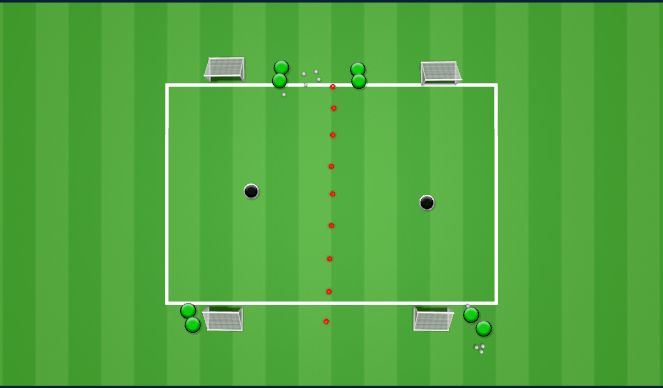
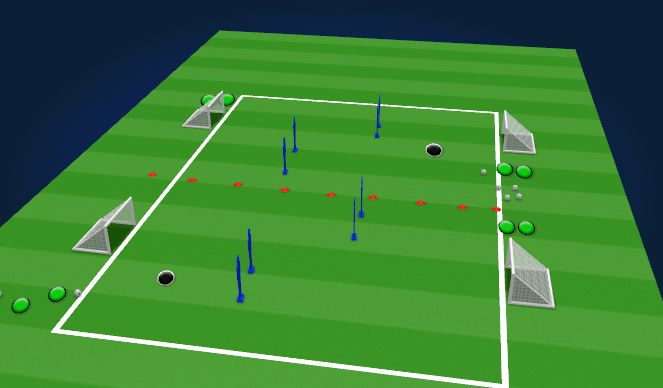
Use same set-up from Part 1 with two goals on either end and a central cone as starting point.
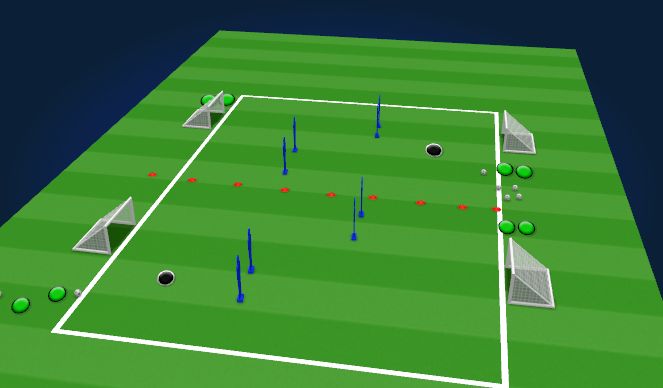
Add 2 mannequins on each side of the pitch, positioned approximately 5–7m wide from the centre to create two channels to turn through or around.
Each player works independently through the sequence.
Instructions:
Attacker receives a ball at the central cone and must turn either through the channel between the mannequins (inside movement) or around the outside of a mannequin (wider angle).
After turning, they drive toward goal and finish under no pressure.
Immediately return to centre and repeat with alternate turning direction for second repetition.
Each player completes 2 rounds (4 total finishes).
Rules:
Turning through mannequins (central gap) = 2-touch max (1 touch control, 1 touch play out).
Turning around mannequin (outside path) = 3-touch max (control, angle adjustment, exit).
Key Focus Points:
First touch with purpose – positive movement into space.
Head up during turn to scan for goal and set finish early.
Angled approach – recognise if better to go inside or outside.
Control weight and surface based on chosen path.
Build comfort finishing from changing angles under constrained touch conditions.
Progressions:
Add passive pressure behind mannequin.
Randomised service – left or right to trigger decision-making on turning path.
Duration:
2 rounds per player (4 finishes total).
60–75 seconds per round with quick recovery.
See the guidance at the top of this page to understand why you are not seeing interactive Football/Soccer images.
Game 1 - Quick Shooting (15 mins)
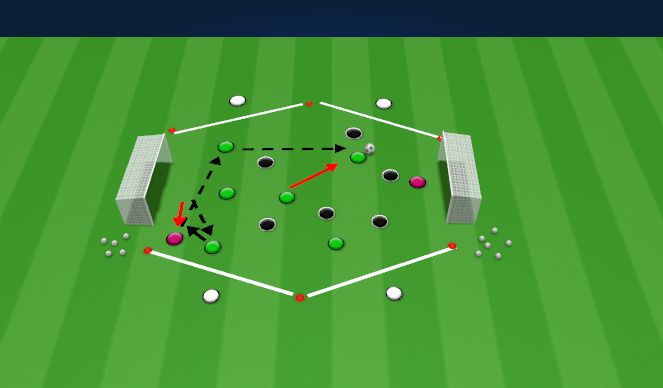
Game 1 – Quick Fire Diamond Finishing
Game Model Moment: Attacking Phase
Principle: Final Third Execution
Sub-Principle: Finesse Finishing (Speed of Execution, Technical Variation)
Organisation:
30x30m diamond-shaped pitch
2 goals placed at each end of the diamond
6 cones to mark diamond corners and central zones
6v6 inside the diamond
2–4 neutral players positioned on the outside of the diamond (supporting both teams)
Supply of balls behind each goal
Instructions:
Game begins as a 6v6 inside the diamond.
Neutral players on the outside help maintain possession and create shooting chances.
Encourage players to shoot early and under pressure.
Reset play immediately from goal line after each finish to maintain tempo.
Scoring Incentives:
1st-time finishes = 2 points
Finishes with weaker foot = 2 points
Regular goal = 1 point
Coaching Points:
Use of body or quick movement to create space to shoot.
Recognise when to use finesse vs. power based on angle and pressure.
Keep scanning – where’s the goalkeeper? Where are defenders?
Movement off the ball to support the shooter or react to rebounds.
Play at speed – if you can't shoot, shift it quickly to a teammate who can.
Finish with purpose – aim to beat the GK, not just hit the target.
Conditions & Progressions:
Neutral players limited to 1 or 2 touches
Encourage 1-touch finishing when possible
Introduce defender pressure on ball receiver
Rotate teams or swap neutrals every 4 minutes
See the guidance at the top of this page to understand why you are not seeing interactive Football/Soccer images.
 Save Image:
Intervention Drill - Striking Zone
Intervention Drill – Ball Striking Skill Zone
Game Model Moment: Attacking Phase
Principle: Final Third Execution
Sub-Principle: Finesse Finishing (Timing, Technique, Quick Decision-Making)
Organisation:
Set up a funnel-shaped channel using cones: 2 cones at the bottom (passing gate), 4 cones at the top (finishing gate) approx. 5m wide and 6–8m from the mini goal.
1 mini goal per funnel
Players work in a single line, passing down the outside of the funnel and rotating positions.
Instructions:
Block 1 – 4 mins Practice (2-Touch Finish):
Player A passes down the side of the funnel to Player B.
Player B controls the ball between the top cones and finishes with a second touch.
Player A sprints to become next shooter; Player B retrieves the ball and rejoins the line.
Block 2 – 4 mins Competition (2-Touch Finish):
Same set-up as Block 1.
Players self-manage scores for accuracy.
Emphasis on following the pass with intensity and managing service (no poor passes).
Block 3 – 4 mins Practice (1-Touch Finish):
Passer adjusts pass weight to leave the ball in the finishing gate.
Receiving player finishes with one touch only.
Quick follow-through to keep repetitions high.
Block 4 – 4 mins Competition (1-Touch Finish):
Maintain same organisation.
Players record goals.
Focus on weight of pass, timing of run, and clean first-time striking.
Coaching Points:
Adjust pass weight for 1-touch vs 2-touch scenarios.
Get your body in line – open hips for finesse, firm foot for power.
Encourage accuracy over power – pick out corners.
Sprint after pass – maintain high work rate and realism.
Anticipate the ball path and angle early to adjust body shape.
Progressions:
Add passive pressure around the finishing gate to simulate closing defender.
Vary the angle of service.
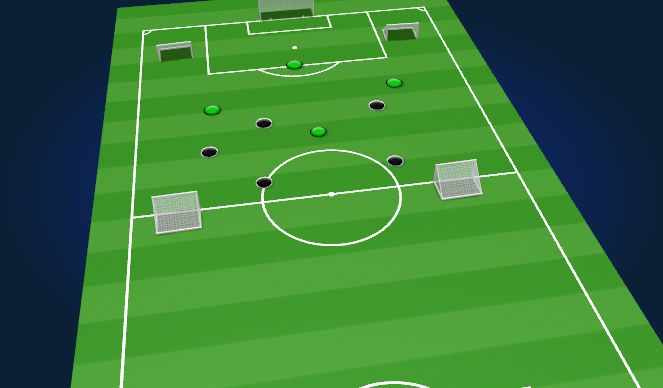
See the guidance at the top of this page to understand why you are not seeing interactive Football/Soccer images.
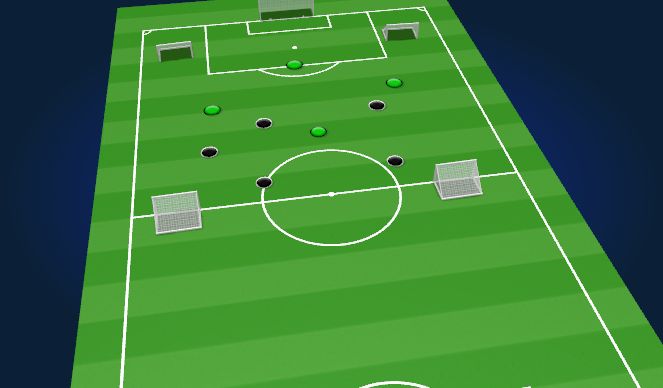
Game 2
Game 2 – Multi-Goal Scrimmage: Finishing with Intelligence
Game Model Moment: Attacking Phase
Principle: Final Third Execution
Sub-Principle: Finesse Finishing (Accuracy, Speed of Execution, Finishing Under Pressure)
Organisation:
Set up a pitch (approx. 30m x 30m)
4 mini goals spread out in each corner of the grid
Even-numbered teams (e.g. 5v5, 6v6)
Standard match rules apply (kick-ins, restarts, etc.)
Instructions:
Players can score in any of the four goals.
Match continues until one team scores 5 goals.
Quick rest and rotate into next game or adjust pairings.
Encourage fast transition after possession is regained.
Coaching Points:
Finishing IQ: Players must scan constantly and make fast decisions about which goal is most exposed.
Weight vs. Power: Encourage side-foot finishes, toe-down lofts, or placed finishes over blasting the ball.
Speed of Thought: Transition to attack quickly – first look forward when ball is won.
Support Play: Movement off the ball to support the ball carrier and offer shooting angles.
Shot Selection: When is the finesse finish the right option? Encourage chipping or placing over power in tight spaces.
Body Shape: Open body to finish across the body or guide the ball into corners.
Progressions:
Add condition: must score with weaker foot = 2 points
Limit touches in attacking half to 3 or fewer to increase tempo
Add bonus for 1-touch finishes or goals within 5 seconds of regaining possession
'%3E%3Cpath id='path4169' d='M 11.4375,70.25 C 11.457031,38.394531 37.277344,13.242188 68.253906,13.050781 99.78125,12.855469 125.73047,38.351563 125.8125,70.078125 125.89844,101.62109 100.43359,127.14063 69.148438,127.42188 37.582031,127.70703 11.464844,102.23438 11.4375,70.25 m 6.425781,-0.08984 c 0.03516,28.421871 23.027344,50.69922 50.519532,50.82031 C 96.433594,121.10156 119.30469,98.367188 119.38281,70.359375 119.45313,42.878906 97.382813,19.714844 69.015625,19.496094 40.75,19.277344 17.964844,42.035156 17.863281,70.160156' style='clip-rule:nonzero;fill:%23333f48;fill-opacity:1;fill-rule:nonzero;stroke:none' /%3E%3Cpath style='fill:%23333f48;fill-opacity:1;fill-rule:nonzero;stroke:none' d='m 39.789063,108.62109 c 0.28125,0.14454 0.550781,0.32032 0.839843,0.4336 2.734375,1.05469 5.554688,1.78125 8.453125,2.23047 2.734375,0.42578 5.484375,0.64453 8.25,0.54297 3.988282,-0.15625 7.832032,-0.94922 11.445313,-2.69532 1.683594,-0.8164 3.246094,-1.82422 4.640625,-3.07422 3.265625,-2.92578 5.171875,-6.582027 5.796875,-10.906246 0.546875,-3.761719 0.04687,-7.425781 -1.09375,-11.019531 -1.4375,-4.523438 -3.730469,-8.582032 -6.703125,-12.265625 -1.03125,-1.277344 -2.082031,-2.535157 -3.113281,-3.808594 C 66.789063,66.1875 65.332031,64.269531 64.0625,62.21875 c -1.601562,-2.582031 -2.835937,-5.316406 -3.613281,-8.261719 -0.683594,-2.574218 -0.902344,-5.1875 -0.6875,-7.828125 0.214844,-2.617187 0.910156,-5.117187 2.152344,-7.441406 2.164062,-4.050781 5.503906,-6.710937 9.816406,-8.179687 1.890625,-0.640625 3.835937,-1.058594 5.832031,-1.195313 1.121094,-0.07813 2.242188,-0.152344 3.363281,-0.164062 4.28125,-0.02734 8.4375,0.734375 12.453125,2.175781 1.871094,0.671875 3.6875,1.496094 5.523438,2.257812 0.226562,0.09375 0.4375,0.230469 0.664062,0.351563 -0.164062,0.25 -0.371093,0.160156 -0.539062,0.164062 -2.824219,0.101563 -5.535156,0.703125 -8.132813,1.804688 -1.335937,0.570312 -2.570312,1.316406 -3.648437,2.296875 -2.527344,2.296875 -3.605469,5.15625 -3.34375,8.550781 0.140625,1.855469 0.722656,3.574219 1.550781,5.222656 0.648438,1.296875 1.414063,2.523438 2.292969,3.675782 0.953125,1.25 1.929687,2.484375 2.929687,3.699218 2.085938,2.523438 4.164063,5.054688 6.050782,7.738282 2.203125,3.136718 4.140627,6.417968 5.589847,9.980468 1.16406,2.867188 2.01562,5.820313 2.39843,8.894532 0.25,2.011718 0.30079,4.03125 0.11719,6.058593 -0.24219,2.640625 -0.79297,5.195313 -1.74609,7.667969 -1.29688,3.36328 -3.300784,6.22656 -5.972659,8.63281 -2.429687,2.19141 -5.171875,3.90625 -8.109375,5.3125 -2.695312,1.29297 -5.464843,2.40235 -8.34375,3.20313 -1.953125,0.54687 -3.945312,0.8789 -5.949218,1.15625 -3.035157,0.41797 -6.085938,0.48828 -9.132813,0.3125 -5.328125,-0.3125 -10.476562,-1.46094 -15.410156,-3.52344 -3.449219,-1.44141 -6.691406,-3.25781 -9.757813,-5.39453 -0.183593,-0.12891 -0.378906,-0.25 -0.53125,-0.41016 -0.07031,-0.0703 -0.05859,-0.22656 -0.08203,-0.34375 z m 0,0' id='path4175' /%3E%3Cpath style='fill:%23333f48;fill-opacity:1;fill-rule:nonzero;stroke:none' d='M 94.699219,29.390625 C 94.089844,29.21875 93.476563,29.054688 92.867188,28.875 90.183594,28.085938 87.46875,27.441406 84.703125,27.046875 c -3.976562,-0.566406 -7.945312,-0.59375 -11.863281,0.402344 -7.535156,1.914062 -12.386719,6.71875 -14.878906,13.996094 -0.894532,2.617187 -1.179688,5.328125 -0.953125,8.078125 0.203125,2.484375 0.867187,4.859375 1.816406,7.160156 0.933594,2.261719 2.117187,4.390625 3.4375,6.449219 1.4375,2.25 3.050781,4.371093 4.640625,6.511718 1.4375,1.933594 2.867187,3.871094 4.261719,5.835938 1.230468,1.730469 2.316406,3.546875 3.273437,5.445312 1.324219,2.625 2.265625,5.378907 2.703125,8.292969 0.433594,2.902344 0.292969,5.765625 -0.660156,8.5625 -0.9375,2.74609 -2.574219,5.00781 -4.777344,6.875 -2.417969,2.04688 -5.203125,3.39844 -8.246094,4.22266 -1.835937,0.5 -3.703125,0.75781 -5.609375,0.82031 -3.886718,0.13281 -7.679687,-0.47266 -11.421875,-1.46094 -2.261718,-0.59765 -4.488281,-1.33203 -6.695312,-2.11328 -0.207031,-0.0742 -0.40625,-0.16797 -0.597656,-0.25 -0.02344,-0.24609 0.148437,-0.19141 0.25,-0.20703 1.96875,-0.30469 3.921875,-0.67969 5.804687,-1.34766 1.367188,-0.48437 2.671875,-1.10156 3.855469,-1.94922 2.25,-1.61328 3.65625,-3.765621 4.0625,-6.515621 0.273437,-1.867188 0.09375,-3.710938 -0.429688,-5.527344 -0.472656,-1.648437 -1.171875,-3.199219 -2.109375,-4.628906 -0.792968,-1.207031 -1.636718,-2.382813 -2.523437,-3.519531 -0.921875,-1.195313 -1.921875,-2.328125 -2.890625,-3.484375 -2.753906,-3.273438 -5.351563,-6.660157 -7.523438,-10.355469 -2.042968,-3.480469 -3.667968,-7.136719 -4.597656,-11.078125 -0.640625,-2.699219 -0.980469,-5.4375 -0.832031,-8.214844 0.238281,-4.53125 1.476562,-8.78125 3.824219,-12.6875 1.082031,-1.800781 2.445312,-3.375 3.988281,-4.800781 2.742187,-2.527344 5.863281,-4.480469 9.257812,-5.992188 3.746094,-1.667968 7.652344,-2.769531 11.707032,-3.394531 3.152343,-0.488281 6.324218,-0.671875 9.507812,-0.519531 8.632813,0.410156 16.671875,2.792969 24,7.433594 0.08203,0.05078 0.152344,0.109375 0.230469,0.167968 -0.0039,0.04297 -0.0078,0.08984 -0.01563,0.136719' id='path4177' /%3E%3Cpath style='fill:%23333f48;fill-opacity:1;fill-rule:nonzero;stroke:none' d='m 31.699219,38.75 c -0.07813,0.238281 -0.152344,0.476563 -0.238281,0.710938 -1.460938,4.074218 -2.066407,8.28125 -1.808594,12.59375 0.4375,7.304687 2.808594,13.925781 7.277344,19.753906 3.714843,4.84375 7.441406,9.671875 11.167968,14.503906 1.113282,1.441406 1.953125,3.007813 2.414063,4.777344 0.332031,1.257812 0.425781,2.539062 0.273437,3.820312 -0.214843,1.832032 -1.070312,3.34375 -2.464843,4.546875 -0.984375,0.851559 -2.113282,1.449219 -3.316407,1.925779 -1.378906,0.54297 -2.8125,0.89063 -4.273437,1.1211 -2.226563,0.35547 -4.46875,0.46093 -6.722656,0.41015 -0.589844,-0.0156 -1.046875,-0.18359 -1.433594,-0.625 -0.636719,-0.72265 -1.335938,-1.39062 -1.9375,-2.14062 C 25.574219,93.800781 22.300781,86.621094 20.84375,78.636719 20.152344,74.835938 19.917969,71 20.15625,67.128906 20.796875,56.773438 24.390625,47.574219 30.859375,39.480469 c 0.21875,-0.273438 0.453125,-0.53125 0.679688,-0.796875 0.05469,0.02344 0.109375,0.04297 0.160156,0.06641' id='path4179' /%3E%3Cpath style='fill:%23333f48;fill-opacity:1;fill-rule:nonzero;stroke:none' d='m 105.41016,101.30078 c -0.13282,-0.3125 0.0234,-0.5039 0.0977,-0.69922 1.38672,-3.749997 1.98047,-7.628904 1.89844,-11.621091 -0.14453,-6.84375 -2.08594,-13.144531 -5.73437,-18.925781 C 99.890625,67.226563 97.917969,64.53125 95.835938,61.917969 94.4375,60.160156 92.988281,58.4375 91.582031,56.6875 90.632813,55.511719 89.6875,54.335938 88.792969,53.121094 c -0.835938,-1.144531 -1.488281,-2.398438 -1.953125,-3.742188 -0.523438,-1.515625 -0.695313,-3.070312 -0.511719,-4.652343 0.21875,-1.839844 1.082031,-3.339844 2.476563,-4.542969 1.039062,-0.890625 2.230468,-1.507813 3.503906,-1.980469 1.632812,-0.609375 3.320312,-0.960937 5.046875,-1.175781 1.917969,-0.238281 3.839841,-0.269531 5.769531,-0.230469 0.52734,0.01172 0.89453,0.203125 1.23828,0.585938 5.50391,6.113281 9.26172,13.144531 11.21875,21.132812 1.11719,4.554688 1.5625,9.179688 1.30469,13.855469 -0.58203,10.625 -4.23438,20.082031 -10.96094,28.339846 -0.15625,0.1914 -0.32812,0.375 -0.51562,0.58984' id='path4181' /%3E%3Cpath style='fill:%23333f48;fill-opacity:1;fill-rule:nonzero;stroke:none' d='m 39.796875,108.63281 c -0.05859,0.0117 -0.117187,0.0234 -0.175781,0.0352 0.05469,-0.0156 0.113281,-0.0312 0.167969,-0.0469 z m 0,0' id='path4183' /%3E%3C/g%3E%3C/svg%3E)
 Play animation
 Play step-by-step
 Repeat (toggle)
 Full Screen
 Pause
Pause Stop
Stop
Warm-Up 1 (5 mins)
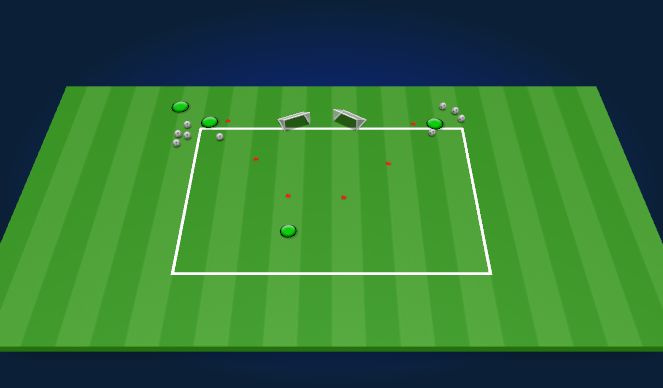
Warm-Up – Part 1: Finesse Circuit Rotation
Game Model Moment: Attacking Phase
Principle: Final Third Execution
Sub-Principle: Finesse Finishing (Rounding/Chipping GK, Composed Finishing)
Organisation:
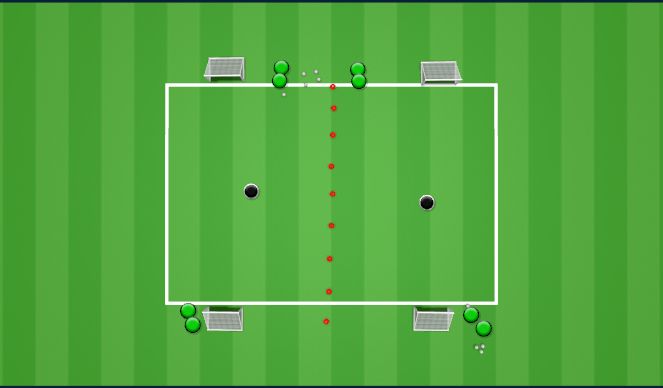
Set up two goals positioned on opposite ends of a 20-30m wide space.
Central starting point marked with a cone at halfway between both goals.
Each player begins at the central cone.
A feeder (coach or player) stands 5-8m from the central cone, facing one of the goals.
Instructions:
The feeder plays a ball into the attacker’s feet.
The attacker receives, turns away from the feeder, and drives toward the opposite goal to finish (1v0).
After finishing, the attacker immediately recovers back to the middle cone.
They receive a second ball from the goal they’ve just shot at and repeat the process in the opposite direction.
Each player completes 4 finishes in a single round – alternating direction and goal.
Key Focus Points:
Sharp turn and positive first touch into space.
Head up to assess the GK position – select finish type (low, high, around, chip).
Timing and body shape to disguise intent.
Composure – don’t rush the shot, focus on quality over power.
Recovery speed and mental reset between finishes.
Progression:
Introduce passive pressure to simulate defensive presence.
Adjust angle or type of service (e.g., bouncing pass, aerial feed).
Duration:
4 sets per player
60–90 seconds active rotation per set