
Football/Soccer Session (Academy Sessions): Passing out from the Goalkeeper

FAW Coach Ed
Dean Manger

Description
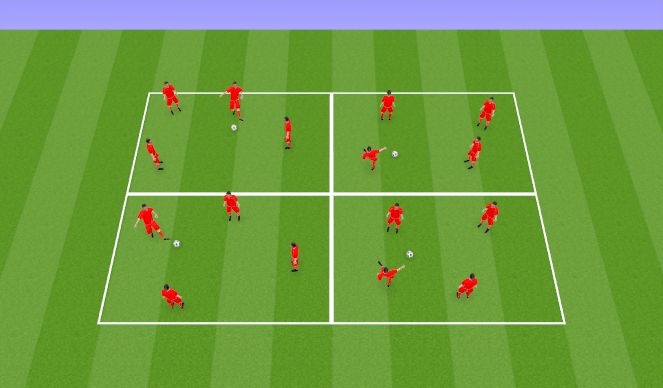
Technical, skill and small sided game based on passing, and specifically passing out from the back.
See the guidance at the top of this page to understand why you are not seeing interactive Football/Soccer images.
See the guidance at the top of this page to understand why you are not seeing interactive Football/Soccer images.
Screen 2
Organisation
- 5 Minute skill builder.
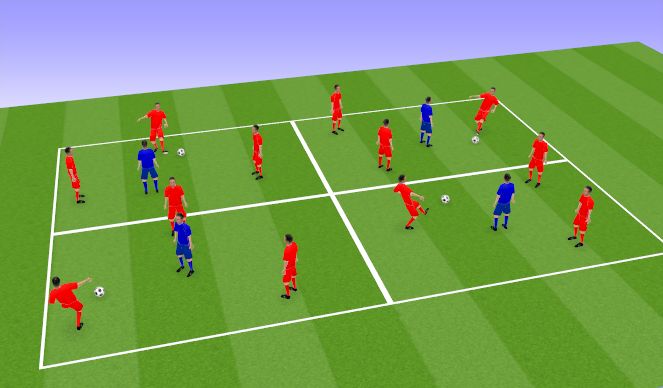
- 3 v 1 inside marked area. Whoever loses possession goes in the middle to play role of defender
- Maintain possession
- Keep the defender moving
- Switch play, practice decision making
- Progressions can include 1 touch passing, using weaker foot to pass or closing the space in to make it smaller and more compact
- Regressions can include moving to edge of area to create more space
- Adaptations can include defender keeping a certain distance from other players and setting targets for amount of passes
See the guidance at the top of this page to understand why you are not seeing interactive Football/Soccer images.
Screen 3
Organisation
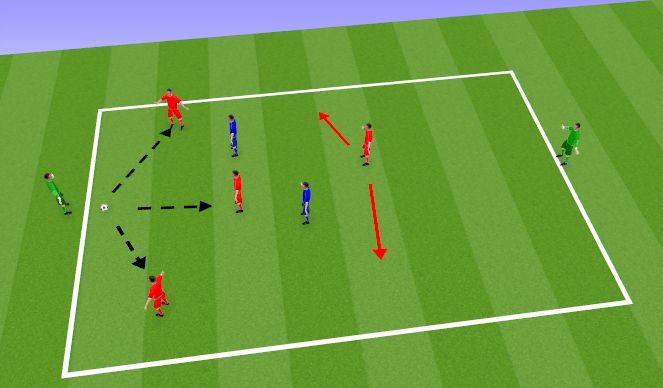
- Skill section aimed at passing out from the goalkeeper
- 2 players to go wide of keeper and 1 in the middle, 1 further out with 2 opposing players. Aim is to have the keeper pass the ball out close and get the ball to the other keeper where players will reset and go again.
- Keeper can play to a wide player near him or through the centre
- This is based on 14 players in session. 2 keepers stay on, other 6 players rotate on basis of 2 minutes constant work whilst the other 6 recover and watch or perform rondos in separate area with other to keep moving and working on passing This can be amended depending on how drill is going.
Key Factors
- Players give keeper options
- Move ball as quickly as possible
- Players keep moving giving the keeper options
- Ball kept on floor as much as possible
- Mechanics of short plassing covered
- Keeper to add variance to the drill so not playing same pass repeatedly
Progression, Regression and Adaptation
- Opposition players to stand off when keeper passes making it easier, Opposition can only block path of ball and not make a tackle, other keeper can move inwards making area smaller
See the guidance at the top of this page to understand why you are not seeing interactive Football/Soccer images.
Screen 4
Organisation
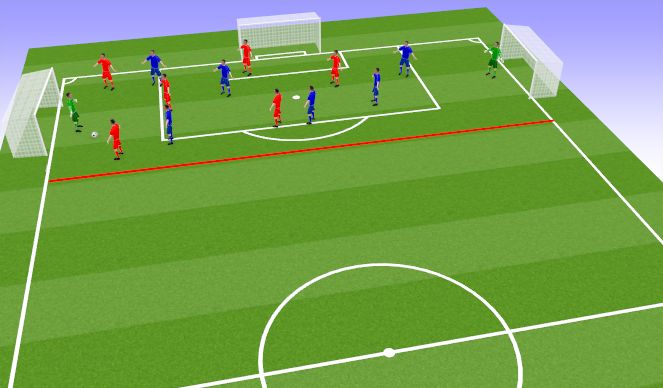
- Small sided game for 20 minutes
- 7 a side format
Key Factors
- Players to give keeper short options for a pass
- players further up field to then come closer looking to receive the ball from the defender
- Keeper to vary passing targets
Progressions and Regressions
- Opposing players must give 5 feet space from nearest player to the keeper, along the lines of being inside the area in a real game
- 1 player can wear a bib and play on the team who has possession thus creating an overload situation and making passing options easier
- Progressions can include a time limit you can hold possession for before it switches to other team to encourage passing forward and increase intensity of the game
- Players can be switched around where required for different positions or teams
- Look at target, Eye on the ball, Angle of approach, Non kicking foot alongside the ball in a comfortable position, Strike at the centre of the ball, keep ankle firm, follow through with foot towards target.
- Players to learn and understand the mechanics of short passing
- Players to have performed the mechanics of short passing during the session
- Players to have developed their decision making skills in keeping possession of the ball from the keeper
- Players to understand how to pass it out from the goalkeeper and the importance of providing options for them
- Players to have been challenged to a level appropriate to their own ability
- Players to have enjoyed the session

 Play animation
 Play step-by-step
 Repeat (toggle)
 Full Screen
 Pause
Pause Stop
Stop
Screen 1
Organisation
Key Factors
Passing with both feet
Changing direction
Minimal touches
Mechanics of passing covered when coaching -
1. Look at target
2. Eye on ball
3. Angle of approach
4. Non-kicking foot alongside ball in a
comfortable position
5. Strike Centre of ball with inside /
outside of foot (Identified area of the ball)
6. Firm ankle
7. Follow through towards target